One or two LEDs mean nothing to the grid, but when a whole city's illumination and a whole building's media façade connect to the grid at once, their power quality becomes a real problem. Nonlinear LED drivers produce harmonic current that pollutes the grid and increases losses. This article is about the power quality of LEDs—harmonics, power factor, and the red line drawn by international standards.
One or two LEDs mean nothing to the grid. But when a whole city’s illumination, a whole building’s media façade, and a large light festival connect to the grid at once, their power quality becomes a real problem.
Nonlinear LED drivers produce harmonic current that pollutes the grid, increases losses, and interferes with other equipment. This article is about the power quality of LEDs—harmonics, power factor, and the red line drawn by international standards. It is a lesson large lighting projects cannot ignore.
Harmonic current: the invisible pollution LEDs put on the grid
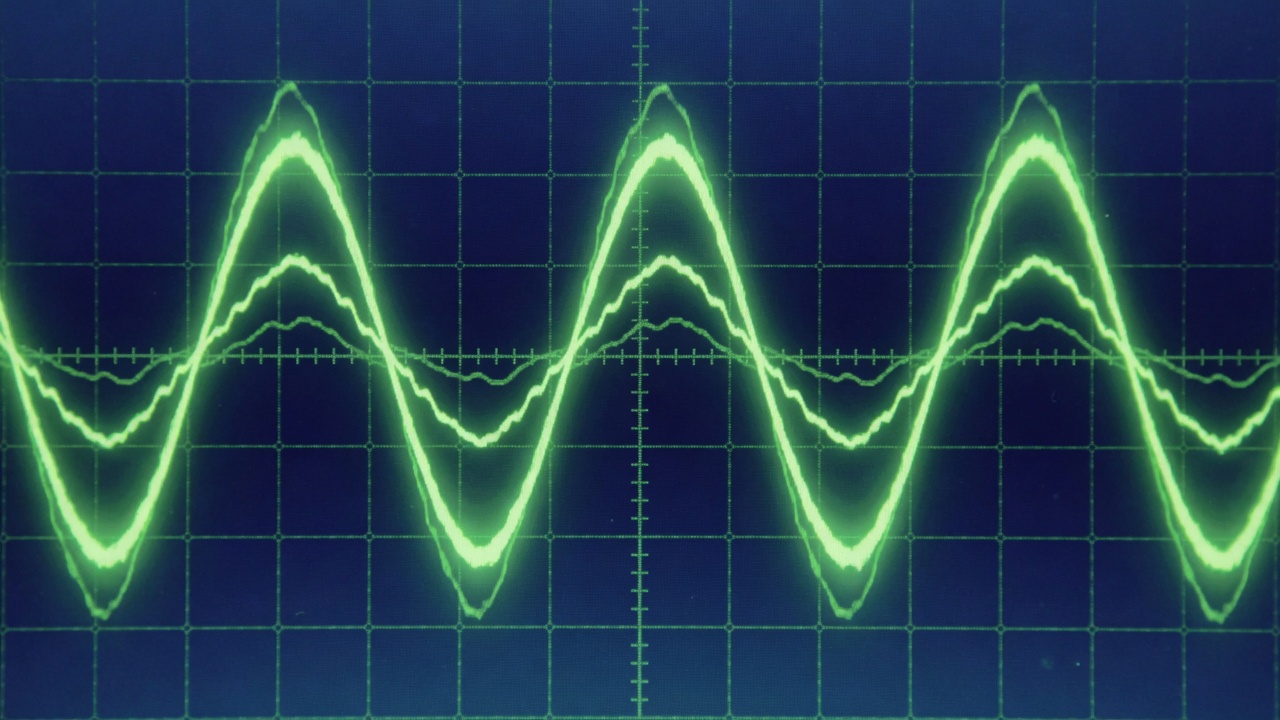
Ideal AC current is a pure sine wave. But an LED driver is a nonlinear load—it draws current from the grid not as a smooth sine but as pulses concentrated near the voltage peaks.
Mathematically, this distorted current can be decomposed into a fundamental plus a series of harmonics (2nd, 3rd, 5th…). Harmonic current is a kind of invisible pollution, and it will:
- increase losses in transformers and conductors;
- distort the voltage waveform;
- interfere with other sensitive equipment on the same grid.
One light’s harmonics are negligible, but thousands together are enough to have a significant effect on a local grid.
IEC 61000-3-2: the red line for harmonics
To control this pollution, there is a clear international standard. IEC 61000-3-2 is the international standard limiting harmonic current emissions[1], specifying maximum values for the 2nd through 40th harmonics for equipment with an input current of up to 16 A per phase.
The key point is that lighting equipment is classified as Class C, with its own harmonic limits[1]. This means projects using large numbers of LEDs must ensure their drivers meet these limits, or they may fail certification or cause grid problems. The 5th edition, IEC 61000-3-2:2018, is the current version.
Power factor: how effectively electricity is used
The other side of power quality is power factor (PF)—a measure of the proportion of electricity that is effectively used.
The harmonics of a nonlinear load lower the power factor, meaning the grid must supply more current to deliver the same real power—increasing line losses and grid burden, and possibly showing up on the electricity bill. A good LED driver performs power factor correction (PFC), reducing harmonics and raising power factor at once, making the lighting system friendlier to the grid.
Scale turns power quality into a required course
Why must large projects care especially? Because the effects accumulate and amplify. City illumination, architectural media façades, and large light festivals run many luminaires at once, and the effects of harmonics and low power factor stack up—raising electricity bills, burdening the grid, and even affecting nearby equipment.
Power quality is determined mainly by driver and power-supply design. PowerMOS provides point-control ICs and carrier solutions, and works with the controller-side power design in large high-voltage applications; harmonic and power-factor compliance for a project needs to be coordinated at the power and drive levels. See the product center for the full solution.
Further reading: for large-scale energy efficiency and voltage drop, see Constant-Current Drive and Energy Efficiency; for EMC immunity, see EMC, ESD, and Surge Reliability Engineering for Addressable LEDs.
Reference standards and literature
- IEC 61000-3-2:2018, Electromagnetic compatibility (EMC) — Part 3-2: Limits — Limits for harmonic current emissions (equipment input current ≤ 16 A per phase). International Electrotechnical Commission.
- IEC 61000-4-5, Electromagnetic compatibility (EMC) — Surge immunity test. IEC — related reference for power reliability.
This article is an educational piece on power engineering. The names and numbers of the standards cited can be verified in the official IEC catalog. Power quality is determined mainly by driver and power-supply design; PowerMOS addressable control ICs use a proprietary carrier protocol optimized for LED pixel control.
FAQ
What is harmonic current, and why do LEDs produce it?
Ideal AC current is a pure sine wave, but an LED driver is a nonlinear load—it draws current from the grid not as a smooth sine but as pulses concentrated near the voltage peaks. This distorted current can be decomposed into a fundamental plus a series of harmonics (2nd, 3rd…). Harmonic current pollutes the grid, increasing losses in transformers and conductors, distorting voltage, and even interfering with other equipment.
What does IEC 61000-3-2 specify?
IEC 61000-3-2 is the international standard limiting harmonic current emissions, specifying maximum values for the 2nd through 40th harmonics for equipment with an input current of up to 16 A per phase. Lighting equipment is classified as Class C, with its own harmonic limits. Projects using large numbers of LEDs must ensure their drivers meet these limits, or they may fail certification or cause grid problems. The 5th edition, IEC 61000-3-2:2018, has been published.
How are power factor (PF) and harmonics related?
Power factor measures the proportion of electricity that is effectively used. The harmonics of a nonlinear load lower the power factor, meaning the grid must supply more current to deliver the same real power—increasing line losses and grid burden. A good LED driver design performs power factor correction (PFC), reducing harmonics and raising power factor at once, which matters greatly for the grid-friendliness of large lighting projects.
Why must large lighting projects care especially about power quality?
A single luminaire has minimal effect, but projects like city illumination, architectural media façades, and large light festivals run many luminaires at once, so the effects of harmonics and low power factor accumulate and amplify—raising electricity bills, burdening the grid, and even affecting other equipment on the same grid. The driver and power design of large projects must therefore factor in IEC 61000-3-2 compliance and power factor.
How does the PowerMOS solution work with power-quality requirements?
Power quality is determined mainly by driver and power-supply design. PowerMOS provides point-control ICs and carrier solutions, and works with the controller-side power design in large high-voltage applications; harmonic and power-factor compliance for a project needs to be coordinated at the power and drive levels. Large lighting project teams are welcome to discuss an overall solution with PowerMOS, bringing their power conditions.
Upgrading your string lights to full pixel control?
Power MOS Electronics delivers the complete stack — driver ICs, addressing equipment, controllers and apps. Tell us about your product and our engineering team will spec it with you.
Contact PowerMOS Browse products