Smart Christmas Lights
App-controlled tree lights, strings and window décor with per-bead color, music sync and animation.
Power-Line Carrier Smart Lighting Solutions
One-stop solutions from IC and controller to software and mass production.
PLC-focused since 201518 US/EU patents500KK+ shipped (P9864 / P9831 / P9832)
What are you building?
Start from your application — no need to understand power-line carrier protocols first.
Start selecting → Find Your ICApp-controlled tree lights, strings and window décor with per-bead color, music sync and animation.
Year-round eave lighting — a color show for holidays, architectural white light every other night.
2D bead matrices that show text and patterns — for venues, retail and home décor.
Micro beads on fine copper wire for tree wraps, shapes and indoor décor.
Premium strings and bulbs that need true white or warm white alongside color.
Malls, cities, stages and 3D light sculptures — high LED counts over long runs.
Festoon / bistro bulb strings for patios and venues — users swap failed bulbs themselves.
Answer five questions and get one best match plus 1–2 alternatives from published specs.
Why PowerMOS
Power MOS Electronics Ltd. (擎茂微電子) delivers one-stop power-line carrier holiday-lighting solutions — from IC and controller to software and mass-production ramp-up.
Four competitive advantages
From cost-optimized standard parts and high-speed solutions to specialty uses such as permanent lights and replaceable bulbs — 50+ parts.
7 owned and 11 formally licensed — 18 US/EU patents across controller, chip and software, so customers ship to the US and EU with confidence.
Patent portfolio →We supply pixel ICs to international smart-lighting and festive-décor brands, holding outgoing bead defects to around 50 PPM.
Partners →The new P9831 high-speed carrier protocol lifts 200-LED refresh from ~12 Hz to 41.5 Hz and 24V load from 250 to 300 LEDs.
P9831 series specs →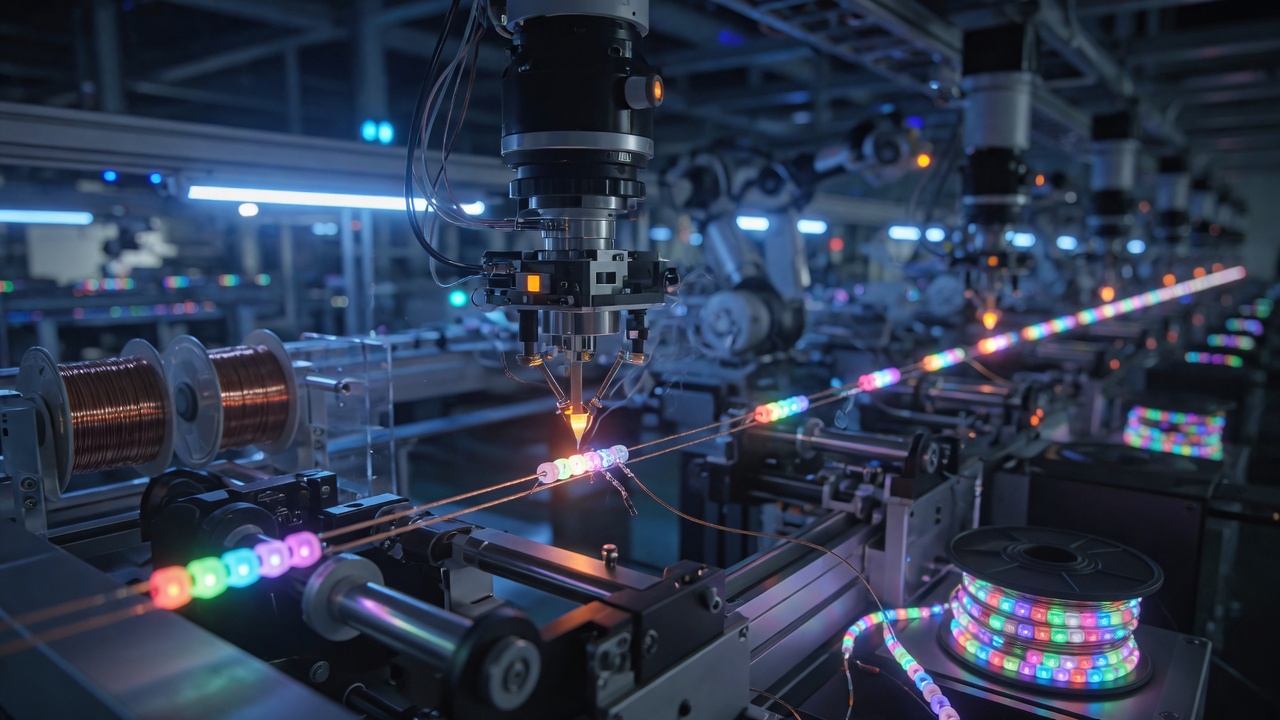
Chip architecture, protocol, addressing process and control system all developed in-house — ~50 PPM defect rate and 500KK+ chips shipped (incl. P9864 and P9831/P9832 series).
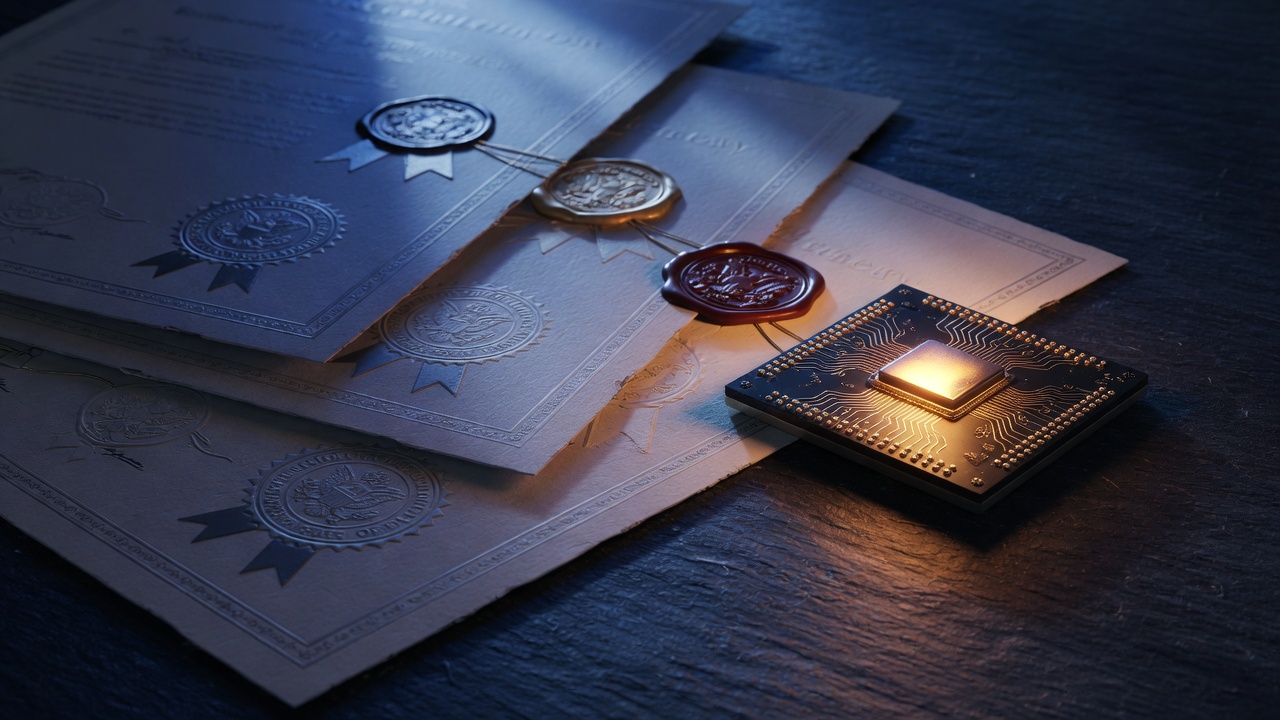
Owned and licensed patents across controller, chip and software — camera addressing, address burning, bead structure and single-level carrier.
Complete Ecosystem
Brands don’t have to integrate a string of suppliers — PowerMOS delivers the chip, bead, controller, app and production-line addressing.
PLC pixel-driver IC design and CP testing in our own test plant
Bead packaging and final inspection; two-layer address allows random-reel assembly
Wi-Fi / Bluetooth modules, SD-card multi-channel controllers, protocol converters
App control, camera addressing, music sync and effects
In-line addressing at 2,400 beads/hour; our own PVC string line
Product Families
Choose the chip by where your string sits: high-volume standard parts, premium strings that need smooth animation, or specialty jobs like year-round permanent lighting.
Built for high-volume seasonal strings — balancing cost, yield and lead time.
A new carrier protocol that lets two-wire strings run smooth per-bead animation.
Designed for demanding or special jobs such as permanent lighting and replaceable-bulb strings.
Interactive Tools
Why Power-Line Carrier
Shift registers need three wires; DMX512 needs five. Faced with a legacy string that gives each bead just two legs, modulating the signal onto the power line is the most direct answer. It's the path PowerMOS has bet on for two decades.
Three-wire architectures like the WS2811 are fast, backed by a mature ecosystem, and have long dominated signage and LED strips. But the signal passes bead to bead, so a single failure breaks the whole string — a hard ceiling for premium outdoor work.
Born from stage lighting, this industry standard gives every bead its own address, and a single failure stays local. The trade-offs are a 250 Kbps ceiling and a high per-node cost — refresh rates struggle once bead counts climb.
Modulate the address and grayscale data onto the power line and each bead needs only two legs. Individual addressing, failures that stay local, and support for automated in-line addressing — the line PowerMOS has kept refining ever since.
FAQ
Quick answers about PowerMOS, power-line carrier pixel control and choosing a chip.
Power MOS Electronics Ltd. (擎茂微電子) is a Shenzhen-based IC design company founded in 2006 that specializes in power-line carrier (PLC) LED pixel driver chips, with R&D centers in Taiwan and Belarus. It supplies festive-lighting and smart string-light brands with a complete solution from IC and controller to mass production.
Power-line carrier pixel control modulates address and grayscale data onto the power line, so power and control share the same two wires. Every LED bead has its own address and can be set individually, a single failed bead does not take down the rest of the string, and addresses can be written automatically on the production line.
WS2811-style shift-register LEDs need three wires and pass data bead to bead, so one failure can break the whole string. DMX512 gives every fixture an address but needs five terminals, tops out at 250 Kbps and costs more. Power-line carrier needs only two wires, keeps individual addressing and fault isolation, and fits the classic two-wire string structure.
Main families: P9864 / P9866 serial-parallel programmable pixel control, P9874 parallel programmable, P9865 / P9873 RGBW four-channel, P9867 / P9868 fixed-address (including the two-section address solution), P9871 dual-layer address for copper-wire lights, the P9831 / P9832 high-refresh series, P9165 single-voltage carrier constant-current driver, P9825 five-channel permanent-light driver and P9779 replaceable-bulb RGBW driver, plus matching controllers. See the Products page for every model.
Christmas string lights, net and curtain lights, copper-wire fairy lights, Christmas trees and 3D motifs, permanent (eave) lighting, replaceable-bulb strings, and decorative installations in malls, theme parks, stages and city lighting where every bead must be controlled individually.
PowerMOS holds 18 US and EU patents (7 owned + 11 formally licensed), covering camera-based address reading, parallel address detection, high/low-level code reading and more. Cumulative shipments exceed 500KK (500 million) chips, including the P9864 and P9831 / P9832 series.
Use the IC finder on the Solutions page, or click "Get a Solution" / "Request Samples" to send your requirements online. You can also email sales-02@powermos.com or call +86 755-2320 7019. Technical documents are available on request from our engineers.
Tell us your bead count, voltage and application, and our engineering team will send you a complete chip + controller proposal.