The same bead can glow for ten years hanging in a living room, yet blacken and fail after a single winter on an outdoor railing. The difference often lies not in the bead but in whether it was properly sealed. Moisture, the sulfur in the air, and the swing between day and night temperatures are the real adversaries of an outdoor light string. What fights them is a thin layer of coating or a pour of potting compound. But the tighter you seal, the harder it is to repair — and that entails a chain of engineering trade-offs. This article is about the encapsulation of beads and modules.
- The three adversaries outdoors: water, sulfur, thermal cycling
- Coating vs. potting: a thin layer or filled to the brim
- Epoxy, PU, silicone: the character of three potting compounds
- The material itself must be “clean”: don’t let the encapsulation become a source of sulfur
- Encapsulation and the IP rating: inside and outside must be designed together
- PowerMOS: using replaceable-bead design to resolve the “seal vs. repair” dilemma
- References and standards
- FAQ
The same bead can glow for ten years hanging in a living room, yet blacken and fail after a single winter on an outdoor railing.
The difference often lies not in the bead itself but in whether it was properly sealed. Moisture, the sulfur in the air, and the swing between day and night temperatures are the real adversaries of an outdoor light string. What fights them is a thin layer of coating, or a pour of potting compound. But the tighter you seal, the harder it is to repair — and that entails a chain of engineering trade-offs. This article is about the encapsulation of beads and modules.
The three adversaries outdoors: water, sulfur, thermal cycling
The environment’s attack on electronic components outdoors comes mainly from three directions.
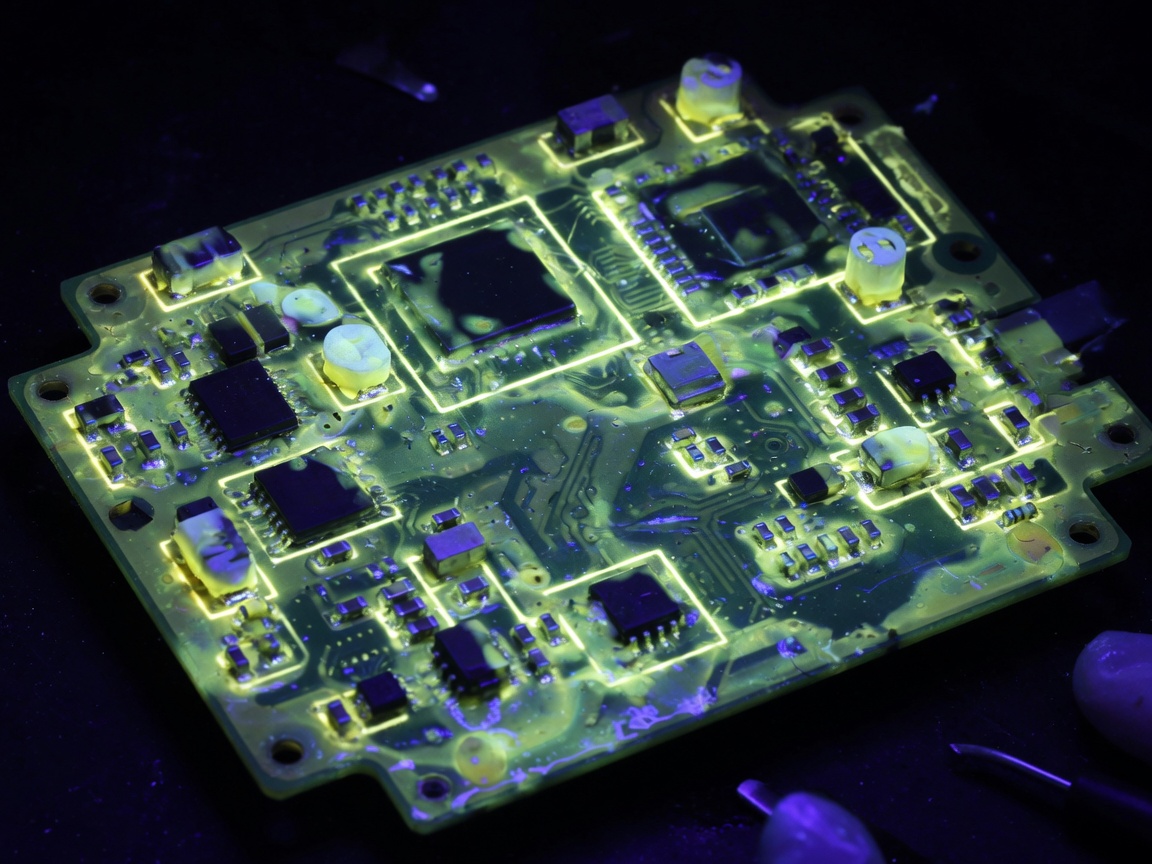
The first is moisture. Once humidity seeps into a circuit it corrodes contacts and causes leakage and ion migration — the most direct source of failure. The second, often underestimated, is sulfuration: the air, rubber, certain compounds, and industrial environments all contain sulfur, which reacts with the silver inside a bead or on its lead frame to form black silver sulfide, blackening the reflective surface and causing lumen depreciation or even an open circuit. It is not burnout but chemical attack, quiet and slow. The third is thermal cycling: the hot-cold cycles of day and night and the seasons make different materials tug at one another because of their differing expansion coefficients, causing fatigue and cracking over time.
The task of encapsulation engineering is to use a single layer of material to block all three adversaries at once — yet different materials and methods each excel in different directions.
Coating vs. potting: a thin layer or filled to the brim
There are broadly two routes to protecting a circuit.
Conformal coating applies a very thin film, usually only tens of microns, that “conforms” to the surface of the components[1]. It resists moisture and dust while adding almost no weight or volume, with little effect on heat dissipation and relatively easy rework. Its drawback is limited mechanical protection — a thin film holds off humidity but not heavy pressure or impact.
Potting fills the entire module with compound and then cures it into a thick encapsulating body. Its sealing and mechanical protection far exceed coating, wrapping the components tightly to isolate them from the environment. The price is weight, impaired heat dissipation, and virtually no reworkability — once the compound cures, the components inside can never be taken out again.
The logic of the choice is clear: for light weight, good heat dissipation, and reworkability, choose coating; for the strongest sealing and mechanical protection, with no intent to repair, choose potting. This is the first trade-off between protective strength and repairability.
Epoxy, PU, silicone: the character of three potting compounds
Once you decide to pot, which compound to choose is another set of trade-offs. The three mainstream materials have starkly different characters:
- Epoxy: hard, with strong adhesion and mechanical strength and good chemical resistance. But it is hard and brittle, with high internal stress under severe temperature swings that can crack components or itself.
- Polyurethane (PU): good toughness, wear resistance, and low-temperature performance, with hardness between epoxy and silicone — a common compromise choice for outdoor applications.
- Silicone: the softest, with the widest temperature range and the best weather and UV resistance. It absorbs the stress caused by thermal cycling, and its softness also aids the heat-dissipation path. The price is lower mechanical strength and higher cost.
For outdoor light strings — an application that prizes weather and thermal-cycle resistance — silicone and PU are often the first choice; where hard, solid mechanical protection is needed and temperature swings are modest, epoxy is more suitable. There is no best compound, only the compound best suited to that environment.
The material itself must be “clean”: don’t let the encapsulation become a source of sulfur
There is an easily overlooked trap here: the encapsulation material can itself be the source of corrosion.
Some compounds release sulfur-bearing or acidic substances during curing or over long-term use, actually accelerating the sulfuration of silver and the corrosion of metals — meant to protect the bead, they end up poisoning it. So beyond choosing the right protective strength, outdoor encapsulation must confirm the material’s chemical compatibility: carefully choose low-corrosion compounds free of corrosive volatiles, especially inside a sealed potting body, where any outgassing is trapped right next to the components and its effect is amplified. Beyond moisture protection, factoring in whether the material itself is “clean” is what makes anti-sulfuration thinking complete.
Encapsulation and the IP rating: inside and outside must be designed together
Many assume that potting alone means waterproofing is met, but in fact encapsulation is only half of achieving an IP rating.
The IP rating describes a whole product’s ability to resist dust and water, and it is achieved by encapsulation and structure working in tandem. The coating and potting of a bead or module are responsible for keeping moisture from seeping into the circuit and corroding contacts; the treatment of the housing structure, sealing gaskets, and cable exits is responsible for the overall waterproof path and mechanical seal. These two must be designed together: no matter how good the housing, without a moisture-resistant coating inside, humidity seeping through gaps will still slowly erode the circuit; and no matter how thorough the internal encapsulation, if the housing leaks at a cable exit, the claimed IP rating cannot be reached. When polymeric encapsulation materials are used in outdoor electrical equipment, there are corresponding evaluation methods for their weather, UV, and water resistance[2].
PowerMOS: using replaceable-bead design to resolve the “seal vs. repair” dilemma
The deepest contradiction in encapsulation engineering is that sealing and repair are opposed: the more thoroughly you seal, the harder it is to save when it fails, often leaving no option but to scrap the whole segment.
PowerMOS pixel-control chips support replaceable-bead repair design — when a single bead fails, it can be replaced locally without scrapping the whole segment. This gives the sealing-versus-repair dilemma room for compromise: modules can adopt a detachable encapsulation design, striking a balance between outdoor protection and later maintenance. Add a single-point-failure-non-propagating architecture, and an individual bead’s failure will not spread along the string, which itself lowers how often repair is needed. Flagship parts such as the P9871/P9874/P9875 (copper-wire series) and P9864/P9866 (RGB three-channel) all suit outdoor-decorative scenarios that value weather resistance and repairability alike. See the Product Center for full part numbers, and for outdoor-encapsulation selection contact sales-02@powermos.com.
Further reading: for the overall design of the waterproof path, see The IP Waterproof Rating of Outdoor LEDs; for the relationship between heat dissipation and encapsulation, see The Thermal Management of LEDs.
References and standards
- IPC-CC-830, Qualification and Performance of Electrical Insulating Compound for Printed Wiring Assemblies. IPC.
- UL 746C, Polymeric Materials — Use in Electrical Equipment Evaluations. UL Solutions (Underwriters Laboratories).
This article is an educational overview of encapsulation materials. The names of the cited standards can be verified in the IPC and UL official catalogs. PowerMOS pixel-control chips use a proprietary carrier protocol optimized for LED pixel control.
FAQ
What is the difference between conformal coating and potting?
Both protect a circuit from the environment; the difference is thickness and method. Conformal coating applies a very thin film (usually tens of microns) that 'conforms' to the surface of the components, resisting moisture and dust while adding almost no weight or volume, and keeping heat dissipation and rework easier. Potting fills the entire module with compound that then cures into a thick encapsulating body, with far stronger mechanical protection and sealing, but heavy, with impaired heat dissipation, and virtually impossible to rework. Choose coating for a thin layer, potting to fill it solid — it is a trade-off between protective strength and repairability.
How do you choose among epoxy, PU, and silicone potting?
The three potting materials each have their own character. Epoxy is hard, with strong adhesion and mechanical strength and good chemical resistance, but it is hard and brittle, with high stress under temperature swings. Polyurethane (PU) has good toughness, wear resistance, and low-temperature performance, and is a common outdoor choice. Silicone is the softest, with the widest temperature range and the best weather and UV resistance; it absorbs thermal-cycling stress and aids heat dissipation, but has lower mechanical strength and higher cost. Outdoor use that prizes weather and thermal-cycle resistance often chooses silicone or PU; choose epoxy for hard, solid protection.
Why do outdoor light strings 'sulfurate' and blacken?
Sulfuration is a common culprit of outdoor bead failure. The air, rubber, certain compounds, and industrial environments contain sulfur, which reacts with the silver inside a bead or on its lead frame to form black silver sulfide, blackening the reflective surface and causing lumen depreciation or even an open circuit. This is chemical attack, not burnout. The countermeasure is encapsulation: use suitable coating or potting to keep sulfur-bearing gases out, and carefully choose compounds that themselves contain no corrosive substances. Beyond moisture protection, anti-sulfuration is an easily overlooked but crucial part of outdoor encapsulation.
How do potting and coating relate to the IP rating?
The IP rating describes a whole product's ability to resist dust and water; encapsulation is one means of achieving it. The coating and potting of a bead or module are responsible for keeping moisture from seeping into the circuit and corroding contacts; the housing structure, sealing gaskets, and cable-exit treatment are responsible for the overall waterproof path. The two must be designed together — no matter how good the housing, without a moisture-resistant coating inside, ingressing humidity will still slowly erode; and even thorough encapsulation must be paired with structural sealing to reach the claimed IP rating.
How does the PowerMOS solution balance sealing and repair?
PowerMOS pixel-control chips support replaceable-bead repair design — when a single bead fails, it can be replaced locally without scrapping the whole segment. This gives the sealing-versus-repair dilemma a compromise: modules can adopt a detachable encapsulation design that balances outdoor protection with later maintenance. Combined with a single-point-failure-non-propagating architecture, an individual bead's failure will not spread along the string, further lowering repair frequency. See the Product Center for full part numbers.
Upgrading your string lights to full pixel control?
Power MOS Electronics delivers the complete stack — driver ICs, addressing equipment, controllers and apps. Tell us about your product and our engineering team will spec it with you.
Contact PowerMOS Browse products