Alert by day, sleepy by night—this circadian rhythm actually depends heavily on light, and especially on the blue content in that light. The eye contains a cell whose job is not to see but to sense light and tell time, and it is especially sensitive to blue. Too much blue light at night, and the body thinks it is still daytime. For decorative lighting this is an important reminder: making bedroom, hospitality, and nighttime-ambiance lights a little warmer and a little less blue has real science behind it. This article is about light and circadian rhythm, and how addressable lighting can produce a 'rhythm-friendly' warm-light mode.
- A light-sensing cell not for seeing, but for keeping time
- Melanopic sensitivity: why “equally bright” doesn’t mean “equal effect”
- CIE S 026: turning rhythmic stimulus into a measurable number
- Warm, not cool: light design for bedrooms and hospitality
- PowerMOS: the addressable foundation for lighting that “auto-warms at night”
- Reference standards and literature
- FAQ
Alert by day, sleepy by night—this circadian rhythm actually depends heavily on light, and especially on the blue content in that light.
The eye contains a cell whose job is not to see but to sense light and tell time, and it is especially sensitive to blue. Too much blue light at night, and the body thinks it is still daytime. For decorative lighting this is an important reminder: making bedroom, hospitality, and nighttime-ambiance lights a little warmer and a little less blue has real science behind it. This article is about light and circadian rhythm, and how addressable lighting can produce a “rhythm-friendly” warm-light mode.
A light-sensing cell not for seeing, but for keeping time
We all know the retina has cones (for color) and rods (for low light). But the retina holds a third type of light-sensing cell with an entirely different job—the intrinsically photosensitive retinal ganglion cell (ipRGC), which contains a light-sensing pigment called melanopsin.
The ipRGC’s main job is not to “form images” but to send the presence and intensity of light into the brain, where it is used to regulate the body clock—influencing the secretion of melatonin (the hormone that makes us sleepy) and alertness. The key point: ipRGCs are especially sensitive to short-wavelength blue light, and this is the physiological basis on which the CIE built its melanopic sensitivity measurement system[1]. So when too much blue light hits the eye at night, it suppresses melatonin and fools the body into thinking it is still daytime, and falling asleep gets harder. This is also why the advice to “avoid blue-light screens before bed” has a real physiological mechanism behind it.
Melanopic sensitivity: why “equally bright” doesn’t mean “equal effect”
Here is a concept that is easy to overlook yet crucial: the eye’s sensitivity for “seeing brightness” and the ipRGC’s sensitivity for “sensing rhythmic stimulus” are two different curves.
- The eye’s brightness sensitivity peaks in the green band (around 555 nm)
- The ipRGC’s melanopic sensitivity peaks in the blue band (around 490 nm)
This difference has an important consequence: two lamps that look equally bright can, if their spectra differ, stimulate the circadian system very differently. A cool-white lamp and a warm-white lamp can be tuned to the same visual brightness, but cool white has more blue content and a high melanopic stimulus, while warm white has less blue and a low stimulus. This is the origin of “same brightness, different rhythmic effect”—and whether nighttime decorative light should be warm is answered right here, in this curve.
CIE S 026: turning rhythmic stimulus into a measurable number
“How strongly does this light stimulate the circadian system?”—once a vague feeling, now backed by a standardized measurement method. CIE S 026:2018 is a measurement system published by the International Commission on Illumination (CIE) that builds a quantitative basis specifically for the non-visual responses to light influenced by ipRGCs[1].
What it does is define a sensitivity function and a corresponding quantity (collectively the α-opic quantities) for each of the five photoreceptor types in the retina, covering the 380–780 nm visible range[1]. The one corresponding to the melanopsin ipRGCs is the melanopic quantity we have been discussing.
With this system, the rhythmic effect of lighting can be calculated and compared objectively, rather than judged by “this light feels a bit cool.” Designers can quantify a light’s melanopic stimulus and decide whether it belongs in a nighttime space. CIE S 026 turns “rhythm-friendly” from a slogan into engineering that can be measured and designed for.
Warm, not cool: light design for bedrooms and hospitality
Bring that science into a real space, and the conclusion is clear: spaces where people spend the evening and prepare to rest should be lit warm.
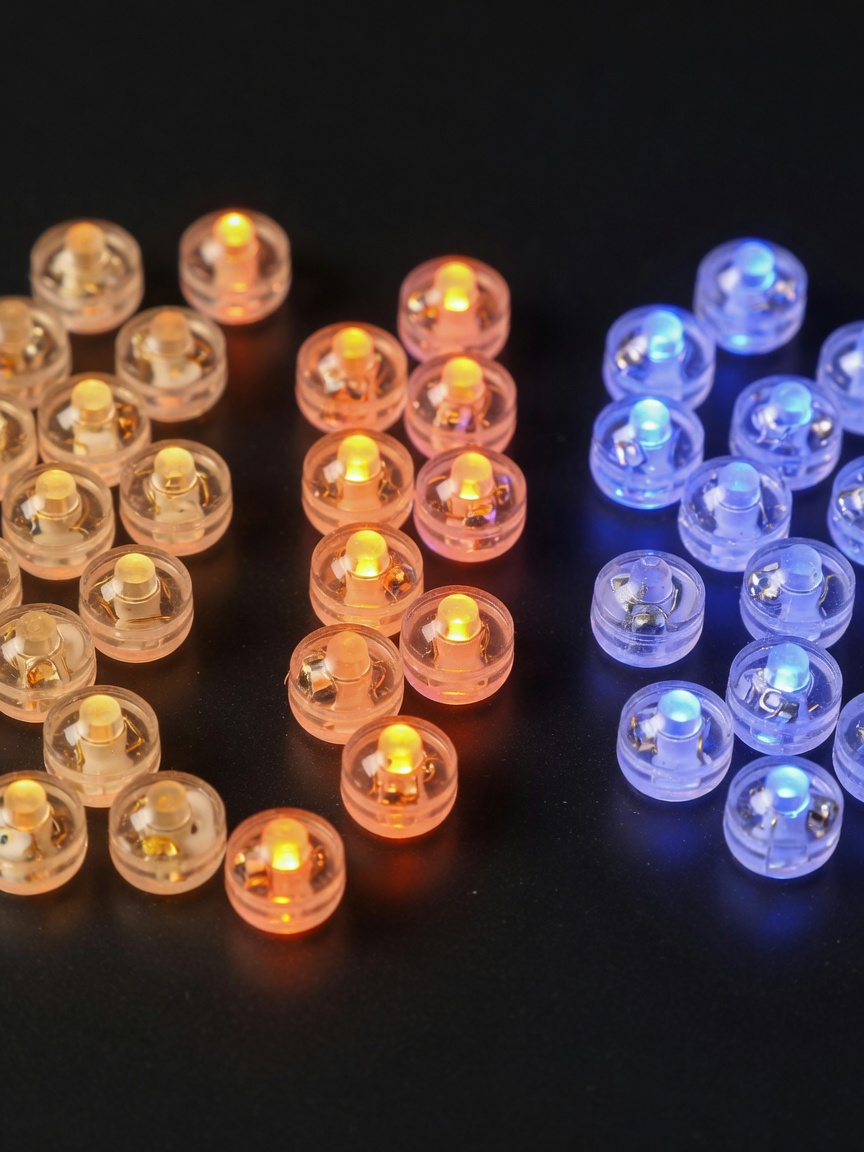
Bedrooms, hotel guest rooms, and hospitality nighttime ambiance lighting all belong to this category. Choosing warm (low color temperature) light—less blue content, lower melanopic stimulus—is less likely to disturb melatonin secretion and sleep onset; cool white, by contrast, comes across as “too stimulating” in these spaces. This also explains why the nighttime lighting of upscale hospitality is almost uniformly a warm amber tone—not just for good looks, but out of care for the guest’s circadian rhythm.
Decorative lighting should especially remember this: for lights accenting a space at night, warm suits a restful setting better than cool. And the ideal approach is not to fix the color temperature, but to let it change with the time of day—bright and lively during the day, auto-warming and dimming after nightfall.
PowerMOS: the addressable foundation for lighting that “auto-warms at night”
To make “changes with the time of day” rhythm-friendly lighting, you need an addressable solution that can dynamically adjust color temperature and brightness—exactly what PowerMOS pixel-control ICs are good at.
The PowerMOS RGB (P9864/P9866) and RGBW (P9865/P9873) series support per-bead addressing and high-grayscale dimming, so lighting can change color temperature and brightness dynamically by time of day: bright during the day, then automatically warming and dimming after nightfall to create a “rhythm-friendly mode” that reduces nighttime blue light. The extra white channel on the RGBW versions makes warm white render more naturally and be easier to control, without having to force white out of R/G/B alone.
Paired with flicker-free constant-current dimming (echoing the IEEE 1789 recommendations on dimming frequency[2]), the nighttime warm light stays soft and stable, serving both visual comfort and rhythm-friendliness. See the product center for full models and parameters.
Further reading: for warm-white rendering and the white channel, see The Color-Rendering Engineering of Full Color and White Light; for hospitality ambiance applications, see Ambient Lighting for Hospitality and Hotels.
Reference standards and literature
- CIE S 026/E:2018, CIE System for Metrology of Optical Radiation for ipRGC-Influenced Responses to Light. International Commission on Illumination (CIE).
- IEEE Std 1789-2015, IEEE Recommended Practices for Modulating Current in High-Brightness LEDs for Mitigating Health Risks to Viewers. IEEE Standards Association.
This article is an educational piece on light and circadian rhythm. The names of the standards cited can be verified in the official catalogs of the CIE and the IEEE. PowerMOS pixel-control ICs use a proprietary carrier protocol optimized for LED pixel control.
FAQ
Why does nighttime light affect sleep and circadian rhythm?
Besides the cones and rods that handle vision, the retina contains a third type of light-sensing cell—the intrinsically photosensitive retinal ganglion cell (ipRGC), which carries the pigment melanopsin. Its main job is not to form images but to send the light signal to the brain to regulate the body clock, influencing melatonin secretion and alertness. ipRGCs are especially sensitive to short-wavelength blue light, so too much blue light at night suppresses melatonin and fools the body into thinking it is still daytime, making it harder to fall asleep.
What does melanopic spectral sensitivity mean?
Melanopic sensitivity describes how strongly the melanopsin-containing ipRGCs respond to different wavelengths of light. Its peak falls in the blue band (around 490 nm), which is not the same as the eye's sensitivity curve for 'seeing brightness.' This means two lamps that look equally bright can, if their spectra differ, stimulate the circadian system very differently—warm white typically produces less melanopic stimulus than cool white. This is exactly why 'same brightness, different rhythmic effect' happens.
What role does CIE S 026 play in this?
CIE S 026:2018 is a measurement system published by the International Commission on Illumination that establishes a standardized way to quantify the non-visual responses to light influenced by ipRGCs. It defines the α-opic quantities and sensitivity functions corresponding to the five photoreceptor types (covering 380–780 nm), so that 'how strongly this light stimulates the circadian system' can be calculated and compared objectively rather than by feel alone. It is the foundation that turns rhythm-friendliness from a concept into measurable engineering.
Why do bedroom and hospitality decorative lighting favor warm, low-blue light?
Because these are spaces where people spend the evening and prepare to rest. Warm light (low color temperature) has less blue content and a lower melanopic stimulus, so it is less likely to disturb melatonin secretion and sleep onset; cool white does the opposite. That is why bedrooms, hotel guest rooms, and hospitality ambiance lighting favor warm tones—a choice that considers both the feel of the space and the circadian rhythm. That nighttime decorative light 'should be warm, not cool' has measurable grounds behind it.
How does PowerMOS's addressable solution support a rhythm-friendly warm-light mode?
PowerMOS pixel-control ICs support per-bead RGB / RGBW addressing and high-grayscale dimming, so lighting can adjust color temperature and brightness dynamically by time of day—for example, creating a rhythm-friendly mode that 'auto-warms and dims after nightfall' to reduce nighttime blue light. The extra white channel on the RGBW versions makes warm white render more naturally and be easier to control. Paired with flicker-free constant-current dimming, it serves both comfort and rhythm. See the product center for the full model list.
Upgrading your string lights to full pixel control?
Power MOS Electronics delivers the complete stack — driver ICs, addressing equipment, controllers and apps. Tell us about your product and our engineering team will spec it with you.
Contact PowerMOS Browse products