Walk into a good hotel and you feel an indescribable ease—the composure of the lobby, the warmth of the restaurant, the grandeur of the ballroom, the haze of the late-night bar. To a large degree, those moods are lighting working silently. Hospitality lighting does not chase dazzle; it chases 'right'—the right mood, in the right space, at the right time. Addressable LEDs make this fine shaping of mood something you can choreograph.
Walk into a good hotel and you feel an indescribable ease—the composure of the lobby, the warmth of the restaurant, the grandeur of the ballroom, the haze of the late-night bar.
To a large degree, those moods are lighting working silently. Hospitality lighting does not chase dazzle; it chases “right”—the right mood, in the right space, at the right time. Addressable LEDs make this fine shaping of mood something you can choreograph and repeat. This article is about the lighting engineering of hospitality spaces.
The essence of hospitality lighting: shaping mood, not manufacturing effect
First, a distinction. Retail lighting chases attraction and motion; hospitality lighting chases atmosphere and comfort—what it shapes is “mood.”
The lobby should be composed, the restaurant warm, the ballroom grand, the bar hazy—and it all must flow with the time of day: bright and fresh by day, warm and relaxed at dusk, soft and intimate late at night. Hospitality lighting therefore values fine control of color temperature and brightness, and glare-free comfort, more than strong dynamic effects. It is a restrained, service-minded philosophy of light.
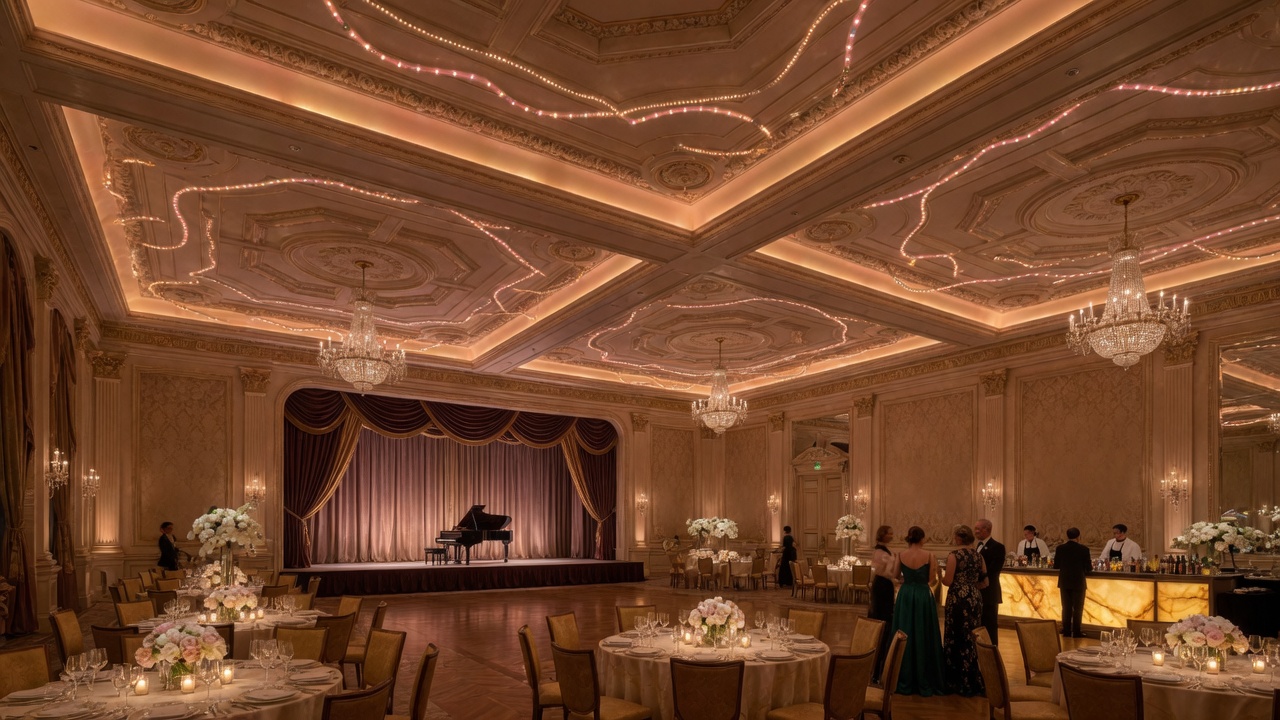
Scene switching: one space, many moods
A day in a hospitality space is a layering of purposes and times. The core value of addressable LEDs is to make a single space a vessel for many moods.
It can preset multiple scenes—the freshness of breakfast, the softness of afternoon tea, the grandeur of the dinner banquet, the intimacy of late night—and switch between them at a touch or on a schedule; it can redress quickly for events too. Per-pixel adjustable color temperature and brightness turn the same space into a completely different mood at different times of day. This flexibility bears directly on a space’s yield and the quality of its experience.
Comfort: the core product of hospitality
Hospitality spaces have one demanding requirement that retail does not—guests linger for long periods, dining and socializing at close range. That turns visual comfort from a “bonus” into a “necessity.”
Too much brightness or glare is uncomfortable, and flicker causes fatigue. Controlling glare (UGR; see Glare and Visual Comfort) and adopting flicker-free dimming (the dimming-frequency recommendations of IEEE 1789[1]) are quality details of hospitality lighting. Comfort is the core product of hospitality, and lighting is a silent but pivotal part of it.
The ballroom: the yield of a multi-purpose space
The ballroom is the place in a hospitality space that most needs flexibility—it might host a wedding banquet, a meeting, and a launch event in a single day, each needing a different atmosphere.
The scene presets of addressable LEDs let a space switch quickly between solemn, grand, and lively, and sync with the segments of an event and with music (see also Addressable Lighting for Weddings and Banquets). This flexibility maximizes the yield of a multi-purpose space—one hall serving the moods of completely different events, without re-rigging the lighting for each one.
Choosing for your hospitality space
PowerMOS offers addressable pixels, controllers, and solutions that support scene presets and adjustable color temperature and brightness, with a constant-current architecture that ensures color consistency and support for flicker-free dimming to meet comfort needs, and two-wire cabling that suits the shaped installations of lobbies, ballrooms, and restaurants. See the product center for the full solution. Hotel, restaurant, and hospitality design teams are welcome to bring their spatial and atmospheric needs to PowerMOS.
Reference standards and literature
- IEEE Std 1789-2015, IEEE Recommended Practices for Modulating Current in High-Brightness LEDs for Mitigating Health Risks to Viewers. IEEE Standards Association.
- EN 12464-1, Light and lighting — Lighting of work places — Part 1: Indoor work places. CEN — reference for indoor lighting and glare.
This article is an educational piece on an application scenario. The names of the standards cited can be verified in the official catalogs of the IEEE and CEN. PowerMOS addressable control ICs use a proprietary carrier protocol optimized for LED pixel control.
FAQ
How does hotel and hospitality lighting differ from commercial retail?
Retail chases attraction and motion; hospitality chases atmosphere and comfort. Hotel and hospitality lighting has to shape 'mood'—composure in the lobby, warmth in the restaurant, grandeur in the ballroom, haze in the bar—and it must flow with the time of day (bright by day, warm at dusk, soft late at night). It values fine control of color temperature and brightness and glare-free comfort more than strong dynamic effects.
How do addressable LEDs enable scene switching in hospitality spaces?
A hospitality space serves many purposes and times of day. Addressable LEDs can preset multiple scenes (the freshness of breakfast, the softness of afternoon tea, the grandeur of a dinner banquet, the intimacy of late night) and switch between them at a touch or on a schedule; they can also redress quickly for events (weddings, meetings, parties). Per-pixel adjustable color temperature and brightness turn a single space into a vessel for different moods.
Why does hospitality lighting value visual comfort and freedom from flicker?
Guests linger for long periods in hospitality spaces, dining and socializing at close range, so visual comfort directly affects the experience. Too much brightness or glare is uncomfortable, and flicker causes fatigue. Controlling glare (UGR) and adopting flicker-free dimming (IEEE 1789) are quality details of hospitality lighting—comfort is the core product of hospitality, and lighting is a silent but pivotal part of it.
What do multi-purpose spaces like ballrooms require of lighting?
A ballroom might host a wedding banquet, a meeting, and a launch event in a single day, each needing a different atmosphere. The scene presets of addressable LEDs let a space switch quickly between solemn, grand, and lively, and sync with the segments of an event and with music. This flexibility maximizes the yield of a multi-purpose space—one hall serving the moods of completely different events.
How can a hotel or hospitality design team obtain a solution?
PowerMOS offers addressable pixels, controllers, and solutions that support scene presets and adjustable color temperature and brightness, with a constant-current architecture that ensures color consistency and support for flicker-free dimming to meet comfort needs. Two-wire cabling suits the shaped installations of lobbies, ballrooms, and restaurants. Hotel, restaurant, and hospitality design teams are welcome to discuss their spatial and atmospheric needs with us.
Upgrading your string lights to full pixel control?
Power MOS Electronics delivers the complete stack — driver ICs, addressing equipment, controllers and apps. Tell us about your product and our engineering team will spec it with you.
Contact PowerMOS Browse products