Festive goods have an awkward fate: the packaging often turns into rubbish faster than the product itself. A box of lights—cardboard outside, then a plastic blister tray, ties, cable clips, a desiccant… a pile on the floor once it's all unpacked. The EU has noticed this, and has put forward its new Packaging and Packaging Waste Regulation, PPWR. It is no longer just 'a suggestion to use a bit less,' but comes with reduction targets and recycled-content requirements, rolling out in phases. This piece is about that pressure, and how brands should respond.
- Festive goods: a hotspot of packaging waste
- From directive to regulation: why PPWR carries more force
- PPWR’s directions: reduction, recycled content, recyclability
- Timeline: rolling out in phases
- Plastic-free packaging: a mature trend, a cost reality
- Fail less, repairable: the PowerMOS other path to sustainability
- References and standards
- FAQ
Festive goods have an awkward fate: the packaging often turns into rubbish faster than the product itself.
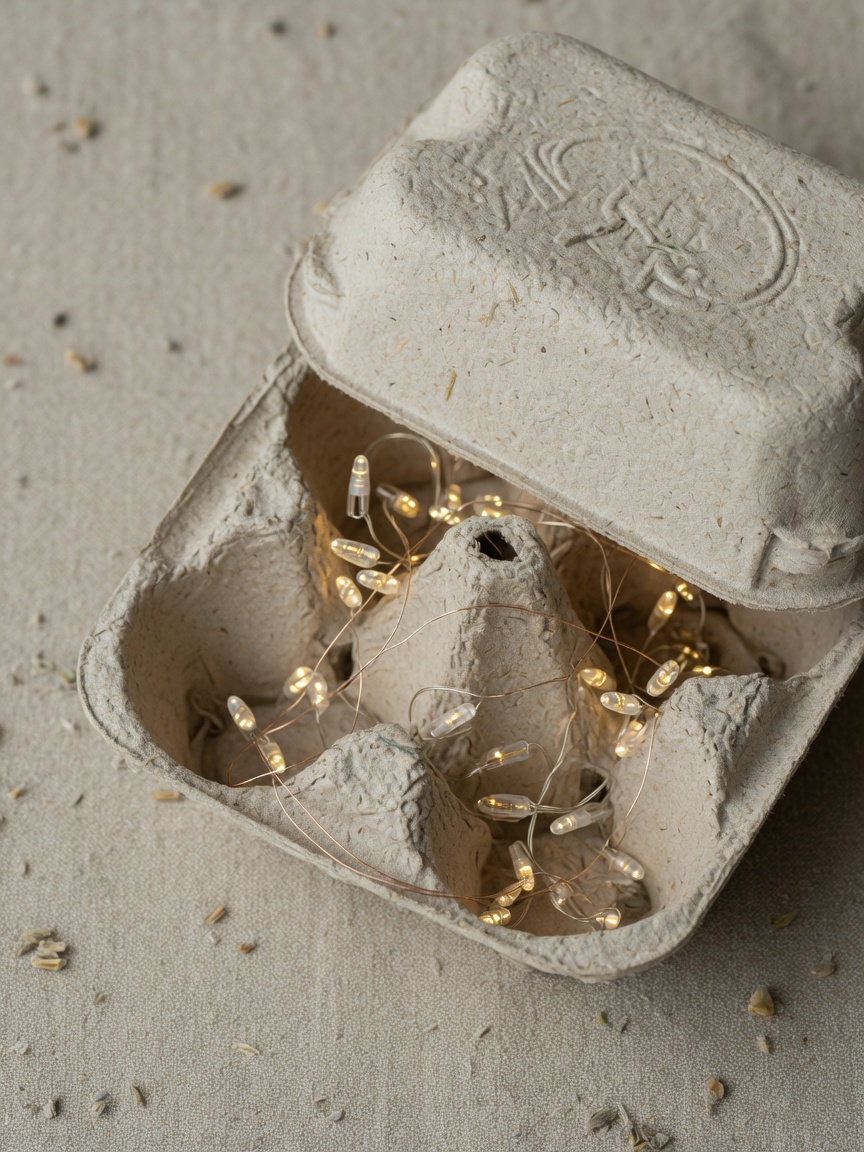
A box of lights—a printed carton outside, then inside a blister tray, ties, cable clips, an instruction sheet, a desiccant… a little pile on the floor once it’s all unpacked, much of it single-use plastic. When goods like these circulate by the tens of millions in peak season, the total volume of packaging waste is considerable. The EU has noticed this, and has put forward its new Packaging and Packaging Waste Regulation (PPWR)—no longer just ‘a suggestion to use a bit less,’ but rolling out with targets and a timeline.
Festive goods: a hotspot of packaging waste
There are several structural reasons festive and decorative goods are a hotspot of packaging waste.
One is display need: these goods rely heavily on packaging to ‘look good’ on the shelf, so they tend toward transparent windows, blister packs and elaborate fixtures. Two is protection need: lights tangle and crush easily, so they need trays and ties to hold them. Three is single-use: bought, taken home, unpacked and thrown away—the packaging’s lifecycle is extremely short. These three stacked together give festive goods a high ‘packaging weight to product value’ ratio—exactly the part regulations like PPWR most want to push down.
From directive to regulation: why PPWR carries more force
The EU used to govern packaging through the old Packaging and Packaging Waste Directive 94/62/EC[2]. The nature of a Directive is that it requires each member state to ‘transpose it into national law’ before enforcement, so the details and timing of implementation often vary from country to country.
The new PPWR (Packaging and Packaging Waste Regulation, Regulation (EU) 2025/40) entered into force on 11 February 2025, replacing that old directive[1]. The key point is that it is a ‘Regulation,’ not a ‘Directive’: a regulation applies directly in all member states, with no national transposition, so the rules are more uniform and the force is stronger. The same set of rules applies uniformly from Lisbon to Helsinki, and brands can no longer exploit the loophole of ‘this country is more lenient.‘
PPWR’s directions: reduction, recycled content, recyclability
PPWR’s requirements for packaging, in broad strokes, point in several directions[1]:
- Reduction: cut unnecessary and excessive packaging, and lower the empty-space ratio
- Recyclability: require packaging to be recyclable by design
- Recycled content: progressively raise the share of recycled material in plastic packaging
- Harmonized labeling: promote consistent recycling labeling, so consumers know how to sort
A reminder: the specific percentage thresholds and covered items under these directions take effect in phases and the details may be adjusted—defer to the official regulatory text, and don’t judge by second-hand summaries. For festive goods, with their elaborate packaging and habitual single-use plastic accessories, every one of these directions lands on a pain point.
Timeline: rolling out in phases
PPWR does not take full effect overnight, but in phases. After entering into force on 11 February 2025 and a transition period, most provisions apply from 12 August 2026[1]; some requirements have their own schedule—for example, harmonized recycling labeling is expected to arrive later (around 2028).
Because the milestones of different provisions vary, this piece gives only the broad direction. When you actually schedule compliance, be sure to check provision by provision against the official text (EUR-Lex)—copy a milestone down wrong, and you could have an entire batch stuck at the border.
Plastic-free packaging: a mature trend, a cost reality
The good news is that plastic-free alternatives are already quite mature: paper blister replacements, honeycomb paper, molded pulp, plastic-film-free packaging, and paper or compostable options for ties. Technically, swapping out the plastic accessories of festive goods is mostly achievable.
The realistic side is cost: plastic-free or high-recycled-content materials usually cost more per unit, and retooling molds, switching suppliers and re-running drop-protection tests all take investment. The pragmatic path is to prioritize—first handle the single-use plastic accessories that regulators watch most closely and that consumers see most (the part that makes people frown the moment they open the box), then optimize the whole gradually. Treat sustainability as phased engineering, not a slogan delivered all at once.
Fail less, repairable: the PowerMOS other path to sustainability
To be honest: PowerMOS makes pixel-control ICs, not packaging, and PPWR compliance responsibility rests with the brand and the packaging supply chain. But sustainability isn’t only the ‘packaging’ path—product durability is another, and one that is often overlooked.
If a string of lights is scrapped entirely because one LED fails, then its life is short, it gets replaced often, and the packaging and shipping it consumes double along with it. PowerMOS pixel-control ICs use a single-point-failure-containment architecture—one failed LED won’t drag down the whole string—and support bead-replaceable repair. A longer product life, and repairability instead of scrapping the whole string, reduces waste—and its attendant packaging consumption—at the source. This is the ‘fail less, repairable’ contribution to sustainability, complementary to packaging reduction as two paths. See the full model range and specifications at the product center.
Further reading: for lifespan and lumen maintenance, see How Long an LED Bead Lasts: Lumen Maintenance, LM-80 and L70 Lifespan Engineering; for the bead-replaceable architecture, see The Two-Wire Contest in Addressable Lighting: The Engineering Evolution of DALI, DMX512 and Power-Line Carrier Pixel Control.
References and standards
- Regulation (EU) 2025/40, on packaging and packaging waste (Packaging and Packaging Waste Regulation). European Parliament and Council (entered into force 11 February 2025; most provisions apply from 12 August 2026).
- Directive 94/62/EC, on packaging and packaging waste. European Parliament and Council (the old packaging directive, replaced by Regulation (EU) 2025/40).
This article is an educational piece on packaging-sustainability regulation and does not constitute legal or compliance advice; specific thresholds, covered items and application dates are governed by the EU’s official text (EUR-Lex) and professional counsel. The names and numbers of the cited regulations can be verified on EUR-Lex. PowerMOS pixel-control ICs use a proprietary carrier protocol optimized for LED pixel control.
FAQ
What is PPWR, and how does it differ from the old packaging directive?
PPWR is the EU's Packaging and Packaging Waste Regulation (Regulation (EU) 2025/40), which entered into force on 11 February 2025, replacing the long-standing old packaging directive 94/62/EC. The biggest difference is that it is a 'Regulation' rather than a 'Directive'—a regulation applies directly in all member states without each country transposing it into national law, so the rules are more uniform and the force is stronger. It sets requirements on reduction, recyclability and recycled content for packaging.
What directions of requirements does PPWR set for packaging?
Broadly, several directions: reducing unnecessary and excessive packaging (reduction), requiring packaging to be recyclable, and progressively raising the share of recycled content in plastic packaging, along with promoting harmonized recycling labeling. These requirements take effect in phases, and the specific percentage thresholds and covered items should be governed by the official regulatory text. For a category like festive goods—elaborate packaging that often uses single-use plastic accessories—the impact is especially direct.
What does the PPWR timeline look like roughly?
PPWR entered into force on 11 February 2025, and after a transition period most provisions apply from 12 August 2026; some requirements have their own schedule—for example, harmonized recycling labeling is expected to arrive later (around 2028). Because the milestones of different provisions vary and the details may be adjusted, the actual application dates and thresholds must be governed by the EU's official text (EUR-Lex); don't judge by second-hand summaries.
Is plastic-free packaging really achievable? What about cost?
Technically, paper blister replacements, honeycomb paper, molded pulp and plastic-film-free packaging are already quite mature, and there are paper or compostable options for ties too. But cost is the reality: plastic-free or high-recycled-content materials usually cost more per unit, and retooling molds, switching suppliers and re-testing drop protection all take investment. The pragmatic approach is to prioritize—first handle the single-use plastic accessories that regulators watch most closely and that consumers see most, then optimize step by step.
What does the PowerMOS solution have to do with packaging sustainability?
PowerMOS makes pixel-control ICs, not packaging—but a product's 'durability' is another sustainability path beyond packaging. PowerMOS pixel-control ICs use a single-point-failure-containment architecture, so one dead LED won't drag down the whole string, and support bead-replaceable repair; a longer product life and repairability instead of scrapping the whole string reduces waste—and its attendant packaging consumption—at the source. This is the 'fail less, repairable' contribution to sustainability. See the product center for the full model range.
Upgrading your string lights to full pixel control?
Power MOS Electronics delivers the complete stack — driver ICs, addressing equipment, controllers and apps. Tell us about your product and our engineering team will spec it with you.
Contact PowerMOS Browse products