We lit up our cities and switched off the stars in the same breath. More than 80% of the world's population lives under skies veiled by light pollution, and many city-born children never see the Milky Way in their lifetime. The problem is more than "you can't see the stars." Excess uplight, harsh glare, and boundary-crossing light trespass are wasting energy, disrupting nocturnal ecosystems, and throwing off the rhythms of life. This article looks at the other side of urban illumination, and how lighting technology can take responsibility.
- The four faces of light pollution
- Uplight: the beam thrown away
- The dark-sky movement and the five principles of responsible lighting
- Ecology and health: darkness is a resource
- Why “controllable lighting” is in fact a friend of the dark sky
- How PowerMOS supports dark-sky-friendly outdoor lighting
- Reference Standards and Literature
- FAQ
We lit up our cities and switched off the stars in the same breath.
More than 80% of the world’s population lives under skies veiled by light pollution; many children who grow up in cities never see the Milky Way with their own eyes. This is more than a romantic loss. Excess uplight, harsh glare, and boundary-crossing light trespass are wasting energy, disrupting nocturnal ecosystems, and throwing off the rhythms of people and animals. This article looks at the other side of urban illumination, and how lighting technology can take responsibility.
The four faces of light pollution
“Light pollution” is not a single phenomenon but a collection of improper lighting. In its Guide on the Limitation of the Effects of Obtrusive Light (CIE 150:2017), the International Commission on Illumination (CIE) compiles the assessment methods and recommended limits for this “obtrusive light” into a single guide[1]. Four common forms are:
- Skyglow: light aimed at the sky is scattered by the atmosphere, washing the whole night sky pale and making the stars vanish.
- Light trespass: light crosses boundaries into places it shouldn’t reach, for example a streetlight shining straight into a bedroom window.
- Glare: an over-bright source in the field of view causes discomfort or even brief disability.
- Clutter / over-lighting: a space lit far brighter and more than necessary.
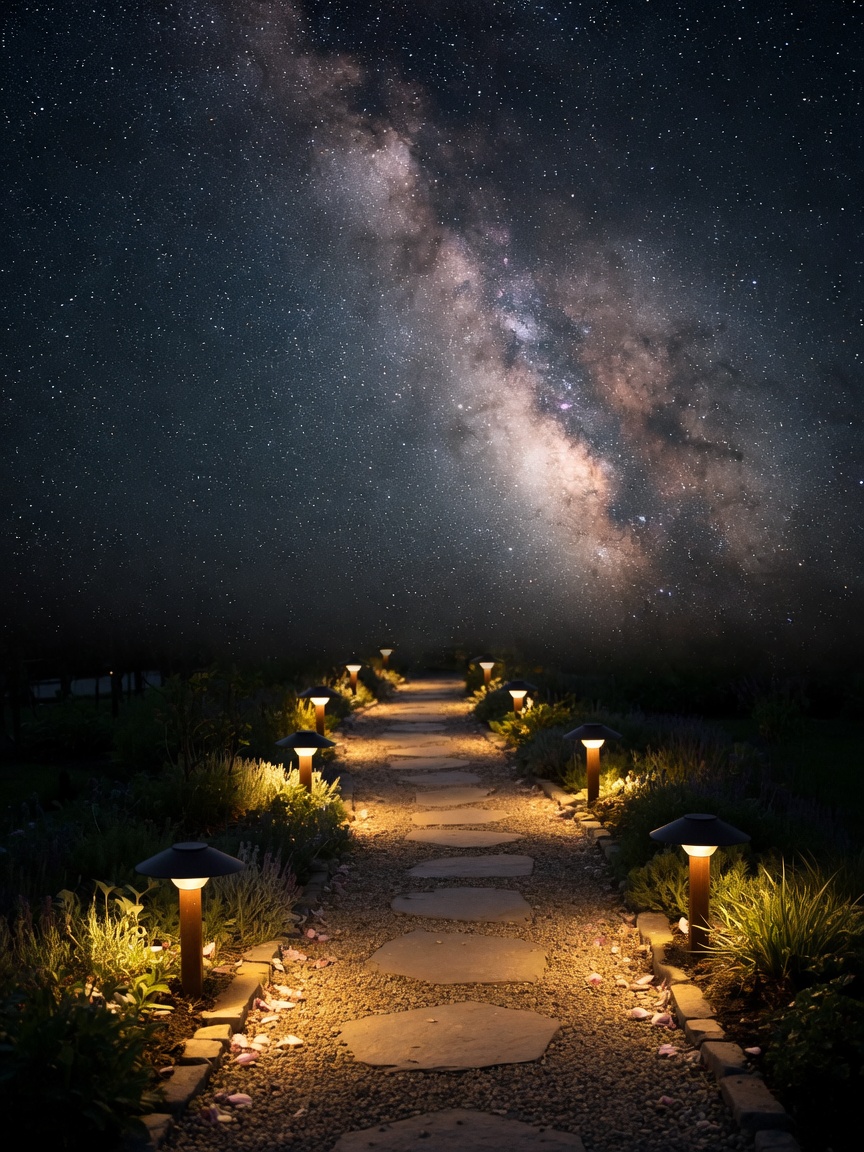
Uplight: the beam thrown away
Among these forms, uplight best captures the essence of the problem. Any light aimed above the horizontal plane and into the sky lights up no target that needs illumination on the ground. Its only effect is to create skyglow while sending your electricity bill and carbon emissions skyward.
That is why responsible lighting places such emphasis on luminaire shielding and light distribution: directing light downward and keeping it within the needed area achieves the lighting purpose while greatly reducing waste. CIE 150 gives progressively stricter recommended caps on uplight and light trespass for different environmental zones (from national parks to city centers)[1], which is exactly this thinking made concrete.
The dark-sky movement and the five principles of responsible lighting
In response to light pollution, the Illuminating Engineering Society (IES) and DarkSky International jointly proposed the Five Principles for Responsible Outdoor Lighting[2]. These five principles are concise and forceful:
- Useful: all lighting should serve a clear purpose.
- Targeted: light should be directed only where it is truly needed, avoiding uplight and spill.
- Low light levels: brightness should be no more than necessary.
- Controlled: light only when needed, making good use of sensors and schedules.
- Warm-coloured: choose warmer color temperatures to reduce the impact of short-wavelength blue light on ecosystems and people.
The line that runs through all five: light only when it should, only where it’s needed. This is not opposition to lighting, but opposition to lighting that is “wasteful and out of control.”
Ecology and health: darkness is a resource
The cost of light pollution is not only astronomical and energetic. Nocturnal animals depend on darkness. Sea turtle hatchlings are misled by coastal lights away from the ocean, migratory birds lose their way under strong light, and insects are drawn to lamps and die in great numbers, rippling up the whole food chain. For people, excess short-wavelength blue light at night suppresses melatonin and disrupts the circadian clock.
In other words, a measure of darkness is itself an environmental resource worth protecting. That is why the five principles include “warm-coloured” and “light only when needed.” The quality of lighting includes knowing when to step aside.
Why “controllable lighting” is in fact a friend of the dark sky
A common misconception: won’t making lights smarter and more controllable encourage more and brighter lighting? In practice, the opposite is true.
The keywords for dark-sky-friendliness are “dimmable, switchable, schedulable,” and these are exactly the strengths of addressable lighting. Compared with always-on illumination that can’t be zoned, lighting capable of section-by-section dimming and zoned control makes it easier to honor the five principles: automatically reduce load late at night, switch on schedule by time of day, and shape light within the area that truly needs it. The tool itself is neutral; what decides whether it is pollution or solution is the granularity of control.
How PowerMOS supports dark-sky-friendly outdoor lighting
Dark-sky-friendly lighting needs underlying control: the ability to adjust brightness point by point and section by section, to zone, and to work with controller scheduling. PowerMOS pixel-control chips support fine brightness adjustment and zoned control, deliver up to 7-20mA for outdoor use, and include surge protection and a single-point-failure containment design suited to long-term outdoor environments. Through controller scheduling and dimming, an outdoor lighting project can balance building a nighttime scene against respecting the night sky. See the full lineup in the Product Center.
Further reading: for outdoor protection ratings, see IP Waterproofing and Environmental Protection Ratings for Outdoor LEDs; for urban scenery applications, see City and Architectural Lighting.
Reference Standards and Literature
- CIE 150:2017, Guide on the Limitation of the Effects of Obtrusive Light from Outdoor Lighting Installations, 2nd Edition. CIE (International Commission on Illumination).
- Five Principles for Responsible Outdoor Lighting. Illuminating Engineering Society (IES) & DarkSky International (formerly the International Dark-Sky Association).
This article is an educational piece on outdoor lighting and light pollution. The names of the cited standards and principles can be verified in the official CIE catalog and on the official websites of DarkSky International and IES. PowerMOS pixel-control chips use a proprietary carrier protocol optimized specifically for LED pixel control.
FAQ
What is light pollution, and what forms does it take?
Light pollution is the improper impact of artificial light on the nighttime environment, usually grouped into several forms: skyglow (which washes out a city's night sky and hides the stars), light trespass (light crossing boundaries into places it shouldn't reach, such as a bedroom window), glare (visual discomfort from an over-bright source), and cluttered, excessive lighting. In CIE 150:2017, the International Commission on Illumination (CIE) compiles the assessment and limits for this 'obtrusive light' into a guide that is an important reference for outdoor lighting planning.
What are the five principles of responsible outdoor lighting?
These are five principles jointly proposed by the Illuminating Engineering Society (IES) and DarkSky International: one, all lighting should have a clear purpose; two, light should be directed only where it is truly needed (avoiding uplight and spill); three, brightness should be no more than necessary (avoiding over-lighting); four, light only when needed (using sensors and schedules); five, choose warmer color temperatures to reduce short-wavelength blue light. The core spirit is 'light only when it should, only where it's needed.'
Why is over-bright outdoor lighting a waste?
Light aimed at the sky or spilling into places that don't need illumination lights up no target, yet still draws power. That share of energy is simply wasted while creating skyglow. Responsible lighting argues for directing light downward, keeping it within the needed area, and dimming or switching it off by time of day. This saves energy, cuts carbon, and returns a darker night to residents and wildlife alike.
Does addressable, dimmable lighting make light pollution worse?
Quite the opposite. The value of addressable lighting is not 'brighter' but 'controllable': it can dim section by section, automatically reduce load late at night, switch on schedule, and shape light within the area that needs it. Compared with always-on illumination that can't be zoned, lighting with fine control makes it easier to honor the dark-sky principle of 'light only when it should.' The tool itself is neutral; what matters is how you use it.
How do PowerMOS solutions support dark-sky-friendly outdoor lighting?
Dark-sky-friendly lighting needs the underlying control to be dimmable, switchable, and schedulable. PowerMOS pixel-control chips support point-by-point and section-by-section brightness adjustment and zoned control, deliver up to 7-20mA for outdoor use, and include surge protection and a single-point-failure containment design suited to long-term outdoor operation. Through controller scheduling and dimming, a lighting project can balance visual effect against respect for the night sky. See the full lineup in the Product Center.
Upgrading your string lights to full pixel control?
Power MOS Electronics delivers the complete stack — driver ICs, addressing equipment, controllers and apps. Tell us about your product and our engineering team will spec it with you.
Contact PowerMOS Browse products