For a Christmas light string to sell into North America, looking good is not enough—it first has to earn a ticket in. That ticket is called UL 588, the safety standard for North American seasonal and holiday decorative products. Retail channels, e-commerce platforms, even insurers may all ask for it. This article covers what UL 588 includes, what that '90 days' positioning means, and Canada's counterpart standard—and what it all means in practice for export manufacturers.
For a Christmas light string to sell into North America, looking good is not enough—it first has to earn a “ticket in.”
That ticket is called UL 588, the safety standard for North American seasonal and holiday decorative products. Retail channels want it to stock a product, e-commerce platforms want it to approve a listing, and even the insurance for a commercial venue may ask about it. This article covers what UL 588 actually includes, what that oft-cited “90 days” means, and Canada’s counterpart standard—and where the practical significance lies for export manufacturers.
UL 588: the dedicated safety standard for seasonal lighting
UL 588’s full title is the safety standard for Seasonal and Holiday Decorative Products, published by UL Standards & Engagement[1].
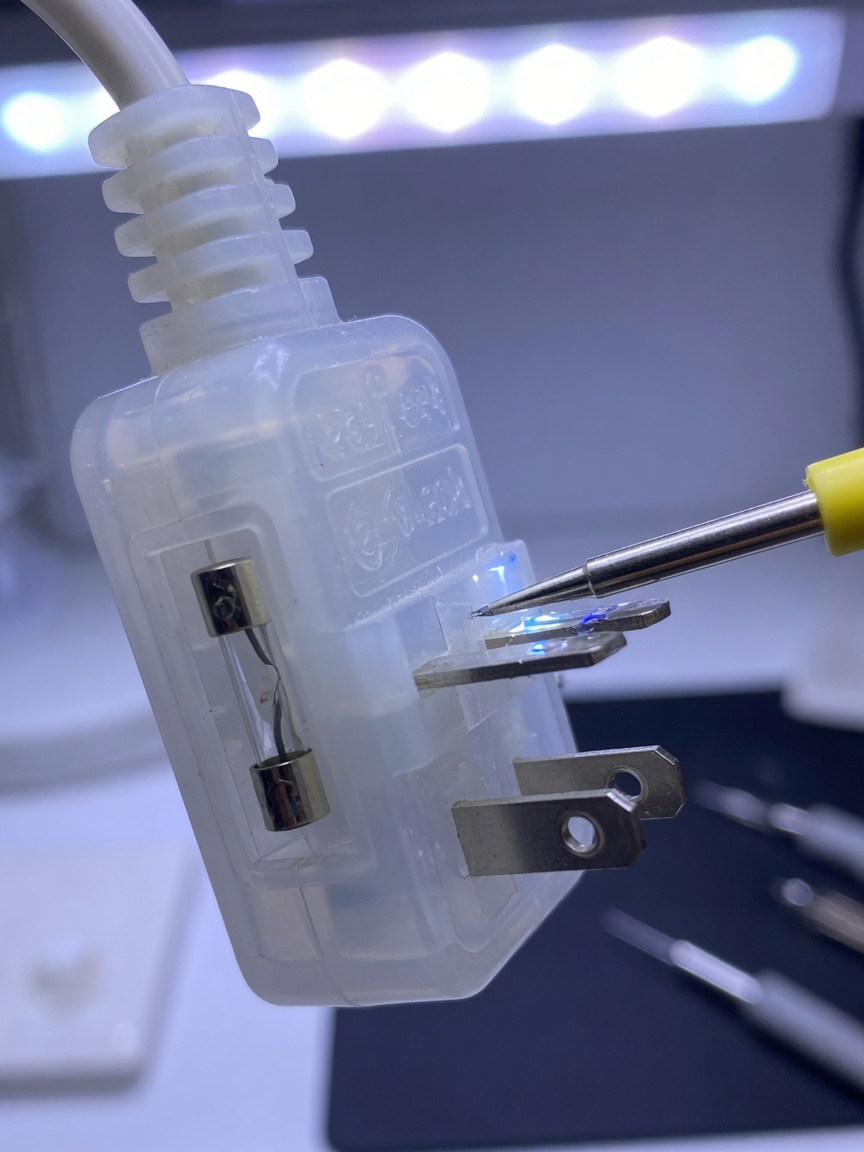
Its product scope is broad: decorative light strings, garlands, lighted figures, electric displays, and more, with a clear goal—preventing fire, electric shock, and injury caused by a product under normal use. For lighting manufacturers exporting to North America, passing UL 588 is all but a precondition for entering the market; without it, mainstream channels are hard even to get in the door.
What that “90 days” means
UL 588 has a distinctive positioning: it targets temporary-use products, and defines temporary use as installation and use for no more than 90 days[1].
That 90 days is not arbitrary—it matches exactly the display cycle of Christmas and other seasonal occasions. A Christmas string usually goes up in late November and comes down after New Year, right within that window. This positioning also draws the line between it and “year-round” lighting products: seasonal lighting assumes intermittent, short-term use, and its safety assessment is built on that premise. The standard also has additional provisions covering parallel-connected string lights designed for year-round use, bringing that common real-world case into scope.
What it covers, and what it doesn’t
Understanding a standard’s boundaries matters as much as understanding what it covers. UL 588’s scope is roughly as follows[1]:
- Voltage ceiling: a maximum input voltage of 120V, used per the U.S. National Electrical Code (ANSI/NFPA 70)
- Types covered: series-connected strings used in a spanning arrangement, parallel-connected direct-wired strings, and garlands, lighted figures, electric displays, and the like
- Not covered: general-illumination use (products that only provide lighting), permanently connected products, products exceeding the specified lampholder sizes, and night-lights, flexible lighting, and the like that have their own dedicated standards
In other words, UL 588 focuses on the “decorative, seasonal, temporary” positioning. Once a product crosses into “year-round, general illumination, permanent installation,” it falls under a different standard.
Canada’s counterpart: CSA C22.2 No. 37
North America is not just the United States. To cover the North American market fully, you also have to look at Canada. Canada’s counterpart is CSA C22.2 No. 37, “Decorative lighting products”[2].
It applies to decorative light strings, lighted decorations, and pre-lit trees that are plug-connected to circuits of 120V or lower and used per the Canadian Electrical Code, Part I, with a scope highly parallel to UL 588’s. In practice, products exported to North America often use dual UL and CSA certification (or composite marks such as cULus and cCSAus) to satisfy both U.S. and Canadian requirements—one certification, two markets—a common approach for exporting to North America.
What it means in practice for export manufacturers
For a factory doing lighting exports, UL 588 is not just a certificate—it drives the whole product plan:
- Design to the standard from the start: lampholder type, wire specifications, and electrical clearances are all constrained by the standard, and fixing them after the fact costs far more than designing to the standard from the beginning
- Certification is a requirement on the finished product as a whole: from wire, plug, and controller to bead and driver, every link is within the assessment scope, and any single point out of compliance can hold up approval
- Market positioning decides the certification set: entering only the U.S., or the U.S. and Canada together, or adding EU CE on top, corresponds to different combinations of standards and test arrangements
Treating safety compliance as part of the product definition, rather than the last gate before shipment, is the shared practice of manufacturers who export to North America reliably.
PowerMOS solutions: smoother electrical safety and selection
An honest note is due: safety certification is a requirement on the finished product as a whole, and the driver IC is one link rather than the whole chain—UL 588 certifies the entire string, not a single IC.
On that basis, PowerMOS pixel-control ICs help a product’s safety and reliability performance in several respects: surge protection and a single-point-failure containment design help with electrical safety and abnormal-condition tolerance; a constant-current architecture keeps brightness stable and reduces the risk of abnormal heating. At the same time, PowerMOS supports both high-voltage AC 110/220V and low-voltage architectures, making it easy for a manufacturer to select by the target market’s voltage (120V in North America, 220/230V elsewhere) and safety positioning. See the product center for the full model list.
Further reading: for the global certification landscape, see The Safety Certification of LED Light Strings: From CE and UL to Each Country’s Ticket In; for surge and reliability, see The EMC, ESD, and Surge Reliability Engineering of LED Strings.
References
- UL 588, Standard for Seasonal and Holiday Decorative Products. UL Standards & Engagement (ULSE).
- CSA C22.2 No. 37, Decorative lighting products. CSA Group.
This article is an educational piece on North American lighting safety. The names of the standards cited can be verified in the official catalogs of UL Standards & Engagement and CSA Group. PowerMOS pixel-control ICs use a proprietary carrier protocol optimized for LED pixel control.
FAQ
What kind of standard is UL 588?
UL 588 is the safety standard for Seasonal and Holiday Decorative Products, published by UL Standards & Engagement. It covers decorative light strings, garlands, lighted figures, electric displays, and similar products, with the goal of preventing fire, electric shock, and injury under normal use. For lighting manufacturers exporting to North America, passing UL 588 is all but a precondition for entering the market.
Why does UL 588 mention '90 days'?
UL 588 targets 'temporary use' seasonal decorative products, defining temporary use as installation and use for no more than 90 days—matching the display cycle of Christmas and other seasonal occasions. This is also what distinguishes it in positioning from year-round lighting products. The standard has additional provisions covering parallel-connected string lights designed for year-round use.
What products and voltages does UL 588 cover?
UL 588 covers temporary seasonal decorative lighting products and accessories rated at a maximum input voltage of 120V and used per the U.S. National Electrical Code (ANSI/NFPA 70). Product types include series-connected strings used in a spanning arrangement, parallel-connected direct-wired strings, and garlands, lighted figures, and electric displays. It does not cover general-illumination use, permanently connected products, or products exceeding the specified lampholder sizes.
Is there a Canadian counterpart standard?
Yes. Canada's counterpart is CSA C22.2 No. 37, 'Decorative lighting products,' which applies to plug-connected decorative light strings, lighted decorations, and pre-lit trees used on 120V or lower circuits per the Canadian Electrical Code. In the North American market it is common practice to satisfy both U.S. and Canadian requirements at once with dual UL and CSA certification (or the cUL/cCSA mark), a standard approach for exporting to North America.
How do PowerMOS solutions help a product meet North American safety standards?
Safety certification is a requirement on the finished product as a whole, and the driver IC is one link rather than the whole chain. PowerMOS pixel-control ICs offer surge protection, single-point-failure containment, and a constant-current architecture, which help a product's electrical-safety and reliability performance; they also support high-voltage AC 110/220V and low-voltage architectures, making it easy to select by the target market's voltage and safety positioning. See the product center for the full model list.
Upgrading your string lights to full pixel control?
Power MOS Electronics delivers the complete stack — driver ICs, addressing equipment, controllers and apps. Tell us about your product and our engineering team will spec it with you.
Contact PowerMOS Browse products