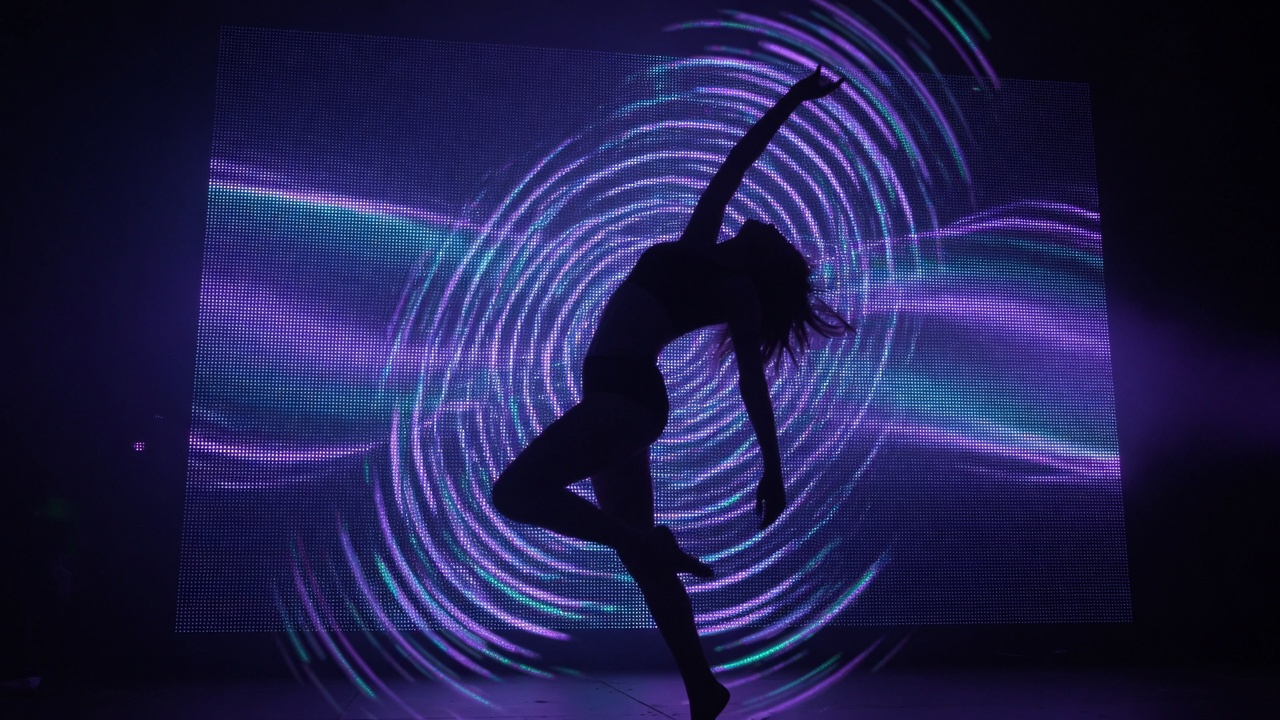
A wall that can recognize people. A dancer throws out a gesture, and the wall streams a ripple of light that follows the body, spreads, and leaves a colored tail behind. This is motion-capture interactive lighting—one of the most 'wow'-inducing languages in immersive shows and brand experiences. Its foundation is LED pixels, every one of which can be called out individually.
A wall that can recognize people. A dancer throws out a gesture, and the wall streams a ripple of light that follows the body, spreads, and leaves a colored tail behind. This is motion-capture interactive lighting—one of the most “wow”-inducing languages in immersive shows, brand experiences, and interactive art installations.
It looks like magic, but underneath it is a clear engineering chain. And whether that chain can hold together comes down to one thing: whether every single LED pixel can be called out individually.
How the effect actually happens, in engineering terms
The signal chain of mocap-interactive lighting breaks into four stages:
- Capture—a motion-capture system (an array of optical cameras, or wearable inertial sensors) outputs the coordinates of a person’s skeletal joints or gestures in real time at high frequency.
- Transmit—the coordinate data is usually streamed into the visual engine via OSC (Open Sound Control) or a custom UDP feed. OSC is a protocol born for real-time interaction and musical networking—low-latency and flexible.
- Map—the visual engine computes each pixel’s color and brightness from the coordinates. For example, the position of each hand becomes the center of a ripple that spreads and fades with distance, leaving a colored trail that slowly dissolves.
- Display—the engine writes the result pixel by pixel, and the controller sends the data to each pixel with its independent address.
Of the four stages, the fourth is the most easily underestimated. Without pixels that are individually controllable, no matter how brilliant the first three stages’ computation, there is nowhere to show it.
Why addressable pixels are the irreplaceable foundation
Ripples, light trails, following—the essence of these effects is that every position on the wall is running its own separate real-time computation. This is exactly the dividing line between addressable pixels and ordinary strips:
- An ordinary RGB strip is one color across its whole length and can only change as a whole, unable to produce a “bright here, dim next to it” spatial pattern.
- Addressable pixels each have a dedicated address and can be written their own color and brightness by the real-time engine—turning the wall into a low-resolution display you can paint point by point.
The value of PowerMOS’s power-line carrier point-control chip lies right here: giving every pixel its own address, and over just two wires. For freely shaped, wiring-constrained interactive installations, two-wire compatibility means a cleaner structure and greater design freedom.
To feel the effect directly, PowerMOS built a visualization in the “mocap interaction” scene of the Christmas Town 3D World—a dancer sweeps an arm, and the wall’s light trail follows in real time.
Two key trade-offs when planning an interactive installation
- Latency is the first bottom line. End-to-end latency from movement to light must be kept within tens of milliseconds, or the sense of immediacy breaks. This demands that the whole chain—mocap output, mapping computation, signal transmission, pixel refresh rate—be fast at every link.
- Pixel count vs. refresh rate decides scale. An addressable pixel’s pixel count per channel is inversely related to FPS; a large light wall must use multi-channel sub-control to divide the wall into blocks and share the load, so it can stay fluid at high resolution. Set the “resolution × refresh rate” target first, then work back to the sub-control architecture.
Turning a concept into an installation
If you are producing an immersive show, a brand interactive space, or an interactive art installation, PowerMOS provides the deepest core these installations need—a built-in carrier driver chip, independently addressable LED pixels, and companion controllers and conversion solutions. Two-wire power-plus-signal makes wiring cleaner, suiting freely shaped installation designs.
Further reading: for the technical lineage of addressable lighting, see The Two-Wire Battle of Addressable Lighting; for the full ecosystem of real-time signal-driven lighting (including esports and concerts), see Technical Insights. Or control every pixel with your own hands directly in the pixel simulator.
References and standards
- Wright, M. (2005). Open Sound Control: an enabling technology for musical networking. Organised Sound, 10(3). CNMAT, University of California, Berkeley.
- ANSI E1.31-2018 (sACN), Entertainment Technology — Lightweight streaming protocol for transport of DMX512 using ACN. ESTA.
- ANSI E1.11 (DMX512-A), Asynchronous Serial Digital Data Transmission Standard for Controlling Lighting Equipment and Accessories. ESTA.
This article is an educational overview of application engineering. PowerMOS point-control chips connect to the real-time interactive signal ecosystem through controllers and conversion solutions, while themselves using a proprietary carrier protocol optimized specifically for LED point control.
FAQ
How does motion capture control an LED light wall in real time?
A mocap system (optical or inertial) outputs the coordinates of a person's skeleton or gestures in real time, usually streamed into a visual engine via OSC (Open Sound Control) or a custom UDP feed; the engine maps the coordinates to each pixel's color and brightness—for example, a palm's position becomes the center of a ripple that spreads and fades across the wall. Because every pixel has an independent address, the engine can write the real-time computed result pixel by pixel, achieving the 'light follows the body' effect.
How low must the latency of interactive lighting be to stay convincing?
End-to-end latency (from the movement to the light's response) is decisive for interactive lighting. People are very sensitive to latency, so it is best kept within tens of milliseconds, or the sense of immediacy falls apart. This requires the whole chain—mocap output, mapping-engine computation, signal transmission, pixel refresh rate—to be fast enough; any slow link accumulates into perceptible latency.
How many pixels does an interactive light wall need, and how does it scale?
It depends on the wall's size and the resolution you want. An addressable pixel's pixel count per channel is inversely related to refresh rate (FPS)—more pixels means a slower single-channel image—so a large light wall cannot be forced onto one channel; instead, multi-channel sub-controller boards divide the wall into blocks to share the load and keep the real-time response fluid. Set the 'resolution × refresh rate' target first, then work back to the sub-control architecture.
Why use addressable pixels for interactive installations instead of ordinary light strips?
An ordinary RGB strip is one color across its whole length and cannot display different content point by point, so it can't produce ripples, light trails, or following—effects that need each position to compute on its own. Addressable pixels each have an independent address and can each be written a different color and brightness by the real-time engine; this is the physical prerequisite for all mocap-interactive effects.
Who supplies the pixels and solutions for this kind of interactive light installation?
PowerMOS supplies the core these installations need—LED pixels with a built-in power-line carrier driver chip and independent addressing, plus companion controllers and conversion solutions. The two-wire power-plus-signal trait makes wiring cleaner, suiting freely shaped interactive installations. You are welcome to discuss pixel selection and control solutions with PowerMOS with your installation concept in hand.
Upgrading your string lights to full pixel control?
Power MOS Electronics delivers the complete stack — driver ICs, addressing equipment, controllers and apps. Tell us about your product and our engineering team will spec it with you.
Contact PowerMOS Browse products