Whether a light string can be safely hung outdoors, within a child's reach, is a question most people answer by thinking first of the beads. But what truly decides whether it will shock someone or overheat and catch fire is that unassuming driver tucked inside the plug or the junction box. It has to step 110V/220V mains safely down to the low voltage the beads can use — get that conversion wrong and the whole string is a hazard. This article is about what safety standards LED controlgear must pass.
Whether a light string can be safely hung outdoors, within a child’s reach, is a question most people answer by thinking first of the beads. But what truly decides whether it will shock someone or overheat and catch fire is that unassuming driver tucked inside the plug or the junction box.
It has to step 110V/220V mains safely down to the low voltage the beads can use — get that conversion wrong and the whole string is a hazard. This article is about what safety standards LED controlgear must pass, and why “a cheap lamp usually cuts corners where you can’t see.”
Controlgear: the safety core most easily overlooked in a light string
In decorative lighting, controlgear is the intermediate electronic unit between the luminaire and the mains, responsible for converting the input voltage into the current or voltage an LED module can use. It commonly appears as a transformer, driver, or power supply — that little box you feel on a light string’s plug is usually it.
“Driver” is the everyday term, while controlgear is the formal wording adopted by the safety standards; both refer to the same class of thing. Its importance lies in this: the beads themselves work at low voltage and are relatively safe; the responsibility of keeping the dangerous mains outside the door and letting through only safe low voltage falls entirely on this controlgear. How well it does that decides the electrical safety of the whole string.
IEC 61347: the general + particular safety skeleton
To evaluate whether a driver is safe, the industry looks at IEC 61347, the safety standard system for lamp controlgear. It uses a “general + particular” structure with clear logic.
At the base is IEC 61347-1, specifying the general and safety requirements common to all controlgear[1]. It applies to controlgear supplied by d.c. up to 250V and a.c. up to 1000V (50/60Hz), covering fundamentals such as insulation, heating, creepage distance and clearance, and marking. Think of it as the “common subject” every luminaire power supply must first pass.
Above it are the various -2-x particular sections, which add requirements for specific types. Among them, IEC 61347-2-13 is the particular section specifically for d.c. or a.c. supplied electronic controlgear for LED modules[2]. To evaluate an LED driver, you usually read -1 and -2-13 together — the general requirements as the foundation, the LED particular section adding the targeted provisions.
It’s worth noting that safety and performance are two separate things: safety falls to IEC 61347, while the performance of LED controlgear (such as output stability) is governed by standards like IEC 62384[3]. Passing the safety standard only means “it won’t hurt anyone,” not “it performs well” — two different thresholds.
SELV: keeping the end you can touch safe
A core design goal of LED controlgear is to keep the output side at a safe voltage. This involves a key concept: SELV (Safety Extra-Low Voltage).
SELV is a protection class based on the principle that “the voltage is low enough to be safe.” Many LED controlgear units are designed to output at SELV or an equivalent voltage, so that even if a user touches the output side, it will not cause a dangerous electric shock. IEC 61347-2-13 explicitly describes the case where LED controlgear provides SELV or an equivalent voltage, or a higher voltage, output[2].
The core value of SELV lies in a “zoning” mindset:
- The dangerous high voltage is isolated on the mains side and inside the controlgear
- The string end the user can touch stays within a safe low-voltage range
- Between the two, the controlgear’s insulation keeps them firmly apart
This is why low-voltage decorative-lighting solutions have an inherent safety advantage — the danger is suppressed at the source.
Heating and insulation: a driver’s two greatest fears
If SELV is the design principle, then heating and insulation are the two hard tests of whether that principle is actually met.
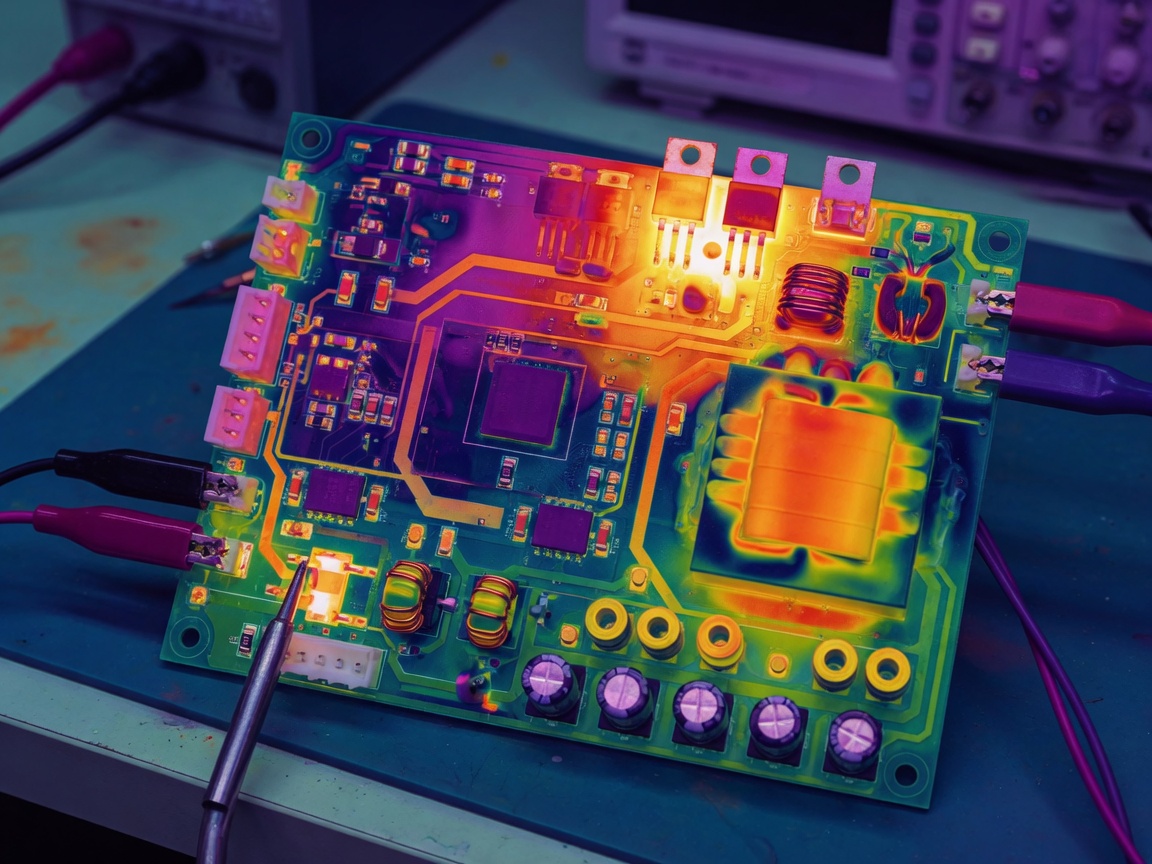
A driver contains components such as transformers and rectifiers that generate heat. Sustained high temperature accelerates the aging of insulation materials, shortens lifespan, and in severe cases leads to a short circuit or even fire. IEC 61347-1 therefore sets limits on winding temperature rise and enclosure temperature, requiring the driver not to overheat under either normal or abnormal conditions[1].
And insulation is the last wall separating the mains from people. The standard requires insulation, after exposure to humidity and heat, to still withstand the specified dielectric-strength (electric-strength) test without breaking down. This point is especially key: insulation must not merely qualify in the ideal factory state, but must hold up under the humidity and high temperature it will actually meet in service. The creepage and clearance requirements likewise exist to ensure sufficient physical separation between high and low voltage.
A cheap, poor-quality driver often cuts corners exactly in these “invisible” places — thinner insulation, skimpier heat dissipation, smaller clearances. It looks the same, but the safety margin is worlds apart.
PowerMOS: making string-end pixel control more reliable
Controlgear safety is the power module’s responsibility, one half of the system; the other half is that the pixel control inside the string must be reliable enough not to become a new source of failure.
PowerMOS pixel-control chips are the addressable control devices inside the string; they use two-wire power-line carrier, support high-voltage AC 110/220V applications and surge protection, and are designed with a single-point-failure-non-propagating architecture — a single bead anomaly won’t drag down the whole string, and combined with replaceable-bead repair, long light strings hold up better in real environments. Controlgear safety (the IEC 61347 series) is the power supply’s responsibility, while PowerMOS is responsible for stable, reliable pixel control at the string end; together they lower risk at the system level. See the Product Center for full part numbers.
Further reading: for the string’s electromagnetic compatibility and surge reliability, see The EMC, ESD, and Surge Reliability of LED Lighting; for the certification system, see The Safety Certification of LED Lighting.
References and standards
- IEC 61347-1, Lamp controlgear — Part 1: General and safety requirements. International Electrotechnical Commission (IEC).
- IEC 61347-2-13, Lamp controlgear — Part 2-13: Particular requirements for d.c. or a.c. supplied electronic controlgear for LED modules. International Electrotechnical Commission (IEC).
- IEC 62384, DC or AC supplied electronic controlgear for LED modules — Performance requirements. International Electrotechnical Commission (IEC).
This article is an educational overview of electrical safety. The names of the cited standards can be verified in the IEC official catalog. PowerMOS pixel-control chips use a proprietary carrier protocol optimized for LED pixel control.
FAQ
What is LED controlgear? Is it the same as a 'driver'?
Controlgear is the intermediate electronic unit between the luminaire and the mains, responsible for converting the input voltage into the current or voltage an LED module can use — in decorative lighting it commonly appears as a transformer, driver, or power supply. 'Driver' is the most common everyday term, while 'controlgear' is the formal wording adopted by the safety standards (the IEC 61347 series); both refer to the same class of thing. It determines the electrical safety and reliability of the whole string.
What kind of standard system is IEC 61347?
IEC 61347 is the safety standard system for lamp controlgear, structured as 'general + particular.' IEC 61347-1 specifies the general and safety requirements common to all controlgear (insulation, heating, creepage distance, clearance, etc.); the subsequent -2-x particular sections add requirements for specific types. Among them, IEC 61347-2-13 is the particular section specifically for d.c. or a.c. supplied electronic controlgear for LED modules. To evaluate an LED driver, you usually read -1 and -2-13 together.
How does SELV relate to LED controlgear?
SELV (Safety Extra-Low Voltage) is a protection class based on the principle that 'the voltage is low enough to be safe.' Many LED controlgear units are designed to output at SELV or an equivalent voltage, so that even if a person touches the output side, it will not cause a dangerous electric shock. IEC 61347-2-13 explicitly describes the case where LED controlgear provides SELV or an equivalent voltage, or a higher voltage, output. The core value of SELV is keeping the danger isolated on the mains side, so the end a user can touch stays within a safe range.
Why are heating and insulation testing so important for a driver?
A driver contains components such as transformers and rectifiers that generate heat; sustained high temperature accelerates the aging of insulation materials, shortens lifespan, and in severe cases leads to a short circuit or fire. IEC 61347-1 therefore sets limits on winding temperature rise and enclosure temperature, and requires that insulation still withstand the specified dielectric-strength test after exposure to humidity and heat. Insulation is the last wall separating the mains from people — it must not break down under any harsh condition, which is the foundation of safety.
How does the PowerMOS solution address controlgear safety design?
PowerMOS pixel-control chips are the addressable control devices inside the string; they themselves use two-wire power-line carrier, support high-voltage AC 110/220V applications and surge protection, and are designed with a single-point-failure-non-propagating architecture so a single anomaly won't drag down the whole string. Paired with an external driver/controlgear, they lower fault risk at the system level. Controlgear safety (the IEC 61347 series) is the power module's responsibility; PowerMOS is responsible for reliable pixel control at the string end. See the Product Center for full part numbers.
Upgrading your string lights to full pixel control?
Power MOS Electronics delivers the complete stack — driver ICs, addressing equipment, controllers and apps. Tell us about your product and our engineering team will spec it with you.
Contact PowerMOS Browse products