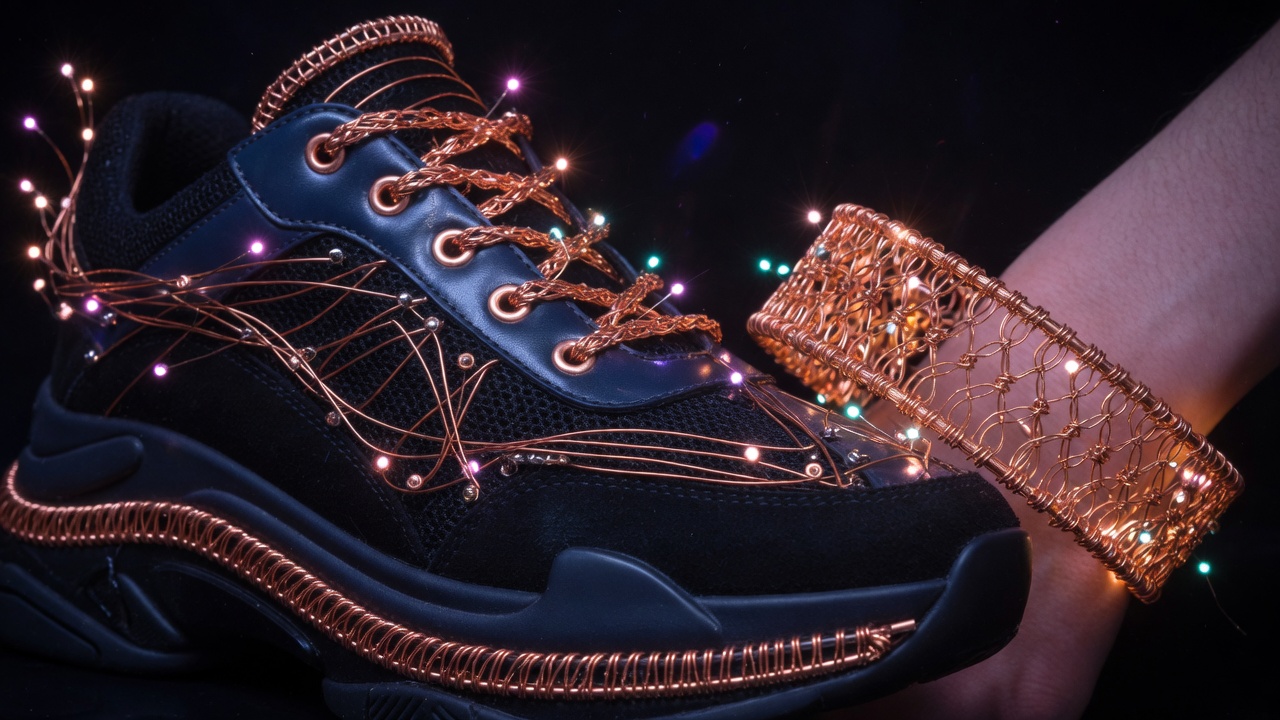
A pair of shoes that pulses with the beat, a wristband that shifts color in the dark, a crystal motif light on your desk. Copper-wire lights and wearable glow are the applications where addressable LEDs come closest to the body, and where they most sternly test the craft of production. The hard part isn't the effect, it's how to build addressable copper-wire lights on an SMD placement line quickly and at low cost. This article is about exactly that manufacturing engineering.
A pair of shoes that pulses with the beat, a wristband that shifts color in the dark, a crystal motif light on your desk. Copper-wire lights and wearable glow are the applications where addressable LEDs come closest to the body, and where they most sternly test the craft of production.
The difficulty here isn’t the effect, it’s manufacturing: how to build addressable copper-wire lights on an SMD placement line quickly and at low cost. This article is about that often-overlooked engineering, the kind that decides whether a product can actually be mass-produced.
The production pain of copper-wire lights: stocking hell
Copper-wire lights are constrained by the SMD placement process and, for years, relied mostly on fixed-color LEDs. More recently they have used fixed address codes to create synchronized, chasing, and flowing effects, but fixed addressing carries a structural pain point:
You have to stock multiple feed reels, each with a different address sequence. That is error-prone to manage, hard to repair in the finished product, and costly. It is the root reason pixel control has spread slowly through copper-wire lights, with applications long stuck at shoe lights, battery light strings, and faux-bulb motif lights under 50 pixels.
Dual-layer addressing: one reel does it all
PowerMOS’s dual-layer addressing is a direct answer to this stocking pain. It integrates two fuses on the same chip:
- Metal fuse — the factory address, laser-trimmed at the wafer stage.
- Poly fuse (silicon fuse) — rewritten in-line by address-writing equipment after the LEDs are assembled into a string.
The key: a single feed reel can handle assembly and address reset for every LED within the valid address range. The SMD placement line no longer needs to stock reels in multiple sequences, and no longer pays extra stocking or management cost to go addressable. For the first time, making copper-wire lights addressable becomes viable on cost.
Automating PVC-wire lights: from experiment to production
Going further, PowerMOS has successfully paired an automatic PVC shoelace-light production machine with address-writing equipment to complete an automated process for PVC light strips[1], with addresses written one by one during the string-making step and matched to each LED’s position in sequence. This line applies to a wide range of 2D (curtain) and 3D (dimensional, motif) products, making mass production of small-format addressable products a reality.
Strings with a parallel structure also support automatic detection of faulty LEDs and rewriting after replacement, closing the last gap in the reputation of pixel-control LEDs for being “hard to repair.”
The special requirements of wearables
Wearables (shoe lights, wristbands, glowing necklaces) come with a different set of constraints: battery-powered, small, low in pixel count but free in form. That asks two things of the LED: low-voltage operating capability and two-wire compatibility.
Carrying power and data on the same two wires keeps the wiring simple, ideal for wrapping around curved surfaces like shoes and wristbands. PowerMOS offers low-voltage parallel pixel-control parts for battery applications to meet these needs.
Choosing parts for your product
PowerMOS offers a full lineup for copper-wire and PVC-wire lights, including dual-layer address, poly-fuse, and metal-fuse process variants suited to different automated production lines. The parallel structure supports automatic detection of faulty LEDs and rewriting after replacement. See the full lineup in the Product Center.
Further reading: the chip-level process behind address writing is covered in Core Technology; the two-section addressing approach is in Two-Section Addressable String Solutions. Motif-light, shoe-light, and wearable brands are welcome to bring their product concepts to PowerMOS.
Reference Standards and Literature
- PowerMOS technical materials, Address Writing and Automated Production Process for Power-Line-Carrier Pixel-Control LEDs. (Production-process notes; see the Core Technology page.)
- IEC 62386, Digital Addressable Lighting Interface (DALI). International Electrotechnical Commission — an international reference standard for addressable lighting.
This article is an educational piece on manufacturing engineering. PowerMOS pixel-control chips use a proprietary carrier protocol optimized specifically for LED pixel control, together with a dual-layer address process.
FAQ
Why are copper-wire lights so hard to make addressable?
Copper-wire lights are constrained by the SMD placement process, and for years they relied mostly on fixed-color LEDs. Making them addressable with the traditional fixed-address approach means stocking multiple feed reels, each carrying a different address sequence, which is error-prone to manage, hard to repair in the finished product, and costly. That is the root reason pixel control has spread slowly through copper-wire lights, with applications mostly stuck at shoe lights, battery light strings, and motif lights under 50 pixels.
How does dual-layer addressing solve the production pain of copper-wire lights?
PowerMOS's dual-layer addressing integrates a metal fuse (factory-set address) and a poly fuse (rewritten in-line on the production line) on a single chip. That lets one feed reel handle assembly and address reset for every LED within the valid address range, so you no longer need to stock reels in multiple sequences. As a result, an SMD placement line pays no extra stocking or management cost to go addressable.
Can PVC-wire lights and shoelace lights be produced automatically?
Yes. PowerMOS has successfully paired an automatic PVC shoelace-light production machine with address-writing equipment to complete an automated process for PVC light strips, applicable to a wide range of 2D (curtain) and 3D (dimensional, motif) products. Addresses are written one by one during the string-making step, matched to each LED's position in sequence, making mass production of small-format addressable products possible.
What special requirements do wearables (shoe lights, wristbands) place on the LEDs?
Wearables are usually battery-powered, small, low in pixel count, but need freedom of form. That asks two things of the LED, low-voltage operating capability and two-wire compatibility. Carrying power and data on the same two wires keeps the wiring simple, ideal for wrapping around curved surfaces like shoes and wristbands. PowerMOS offers low-voltage parallel pixel-control parts for battery applications to meet these needs.
How can motif-light brands get an addressable copper-wire solution?
PowerMOS offers a full lineup for copper-wire and PVC-wire lights, including dual-layer address, poly-fuse, and metal-fuse process variants suited to different automated production lines. The parallel structure also supports automatic detection of faulty LEDs and rewriting after replacement. Motif-light, shoe-light, and wearable brands are welcome to bring their product concepts and discuss part selection and production solutions.
Upgrading your string lights to full pixel control?
Power MOS Electronics delivers the complete stack — driver ICs, addressing equipment, controllers and apps. Tell us about your product and our engineering team will spec it with you.
Contact PowerMOS Browse products